
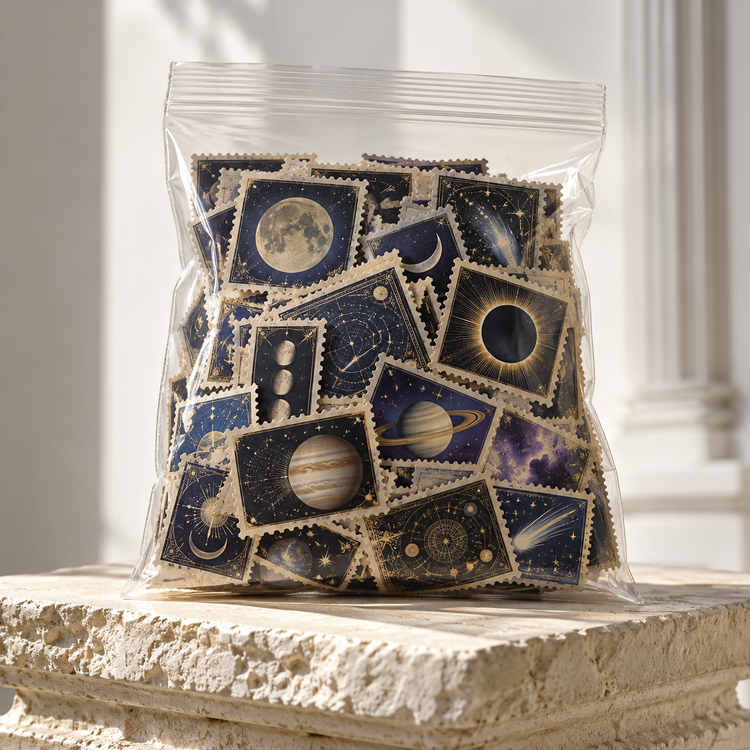
Best Small Resealable Bags for Stamps
Posted by AWS Team on Sep 30th 2026
The best small resealable bags for stamps are clear, properly sized bags used as an organizational layer around stamps that already have suitable philatelic protection.
For everyday sorting, retail inventory and order fulfillment, a practical starting point is:
a clear 2–2.5 mil resealable bag sized to the complete protected stamp, glassine envelope, approval card, stock card or mount
Small resealable bags can help stamp collectors and dealers keep:
-
Individual stamps
-
Stamp sets
-
Glassine envelopes
-
Approval cards
-
Stock cards
-
Inventory labels
-
Certificates
-
Customer-order information
organized and separated.
However, ordinary resealable bags should not automatically be treated as archival stamp enclosures.
Stamps are paper collectibles that may also contain:
-
Water-soluble gum
-
Pressure-sensitive adhesive
-
Delicate perforations
-
Fugitive inks
-
Foils
-
Embossing
-
Attached hinges
-
Cancellation marks
-
Fragile paper
-
Condition-sensitive margins
For valuable, unused, historic or otherwise collectible stamps, use purpose-made philatelic materials for primary protection. The resealable bag can then function as secondary packaging for organization, retail presentation and fulfillment.
The strongest selection process is:
identify the stamp → choose the primary enclosure → measure the complete package → select the bag size → choose thickness → test → label → buy the appropriate quantity
Quick Guide to Small Resealable Bags for Stamps
| Stamp Format | Recommended Packaging Approach | Main Concern |
|---|---|---|
| Single used stamp | Philatelic mount, stock card or glassine first | Perforations and handling |
| Single mint stamp | Suitable stamp mount or stockbook first | Gum and adhesive condition |
| Stamp pair | Protective enclosure sized to the pair | Joined perforations |
| Strip of stamps | Longer protective support | Bending and perforation separation |
| Stamp block | Flat support or suitable mount | Creasing and corner protection |
| Souvenir sheet | Larger flat enclosure | Full-sheet dimensions |
| Glassine envelope | Clear secondary resealable bag | Labeling and organization |
| Approval card | Bag sized to the complete card | Card dimensions |
| Stock card | Bag sized to card width and height | Avoid bending |
| First-day cover | Larger paper-preservation enclosure | Envelope and cancellation condition |
| Retail stamp lot | Clear bag plus accurate label | Visibility and SKU control |
| Bulk common stamps | Separate by type in suitable enclosures | Avoid overfilling and moisture |
What Makes a Good Resealable Bag for Stamps?
The best bag should:
-
Fit the complete protected stamp
-
Close without pressing against the contents
-
Allow easy insertion and removal
-
Keep the inventory label with the correct item
-
Support visual identification
-
Fit existing drawers, boxes or bins
-
Avoid unnecessary extra space
-
Match the weight and quantity of the contents
-
Perform consistently during fulfillment
A good stamp bag should not:
-
Crush perforations
-
Bend approval cards
-
Trap damp stamps
-
Force a souvenir sheet to curl
-
Interfere with the closure
-
Be confused with a permanent archival enclosure
-
Replace proper philatelic storage materials
Use Resealable Bags as Secondary Packaging
The most important stamp-packaging distinction is between primary and secondary protection.
Primary Stamp Protection
Primary protection is the material directly touching or closely surrounding the stamp.
Examples include:
-
Stamp mounts
-
Stockbooks
-
Stock cards
-
Approval cards
-
Glassine envelopes
-
Archival paper enclosures
-
Chemically stable sleeves made for paper collectibles
-
Album pages and suitable mounting systems
The American Philatelic Society’s resource on storing stamp collections discusses environmental and storage risks that can harm stamps and postal-history materials.
Secondary Stamp Packaging
Secondary packaging may hold:
-
A glassine envelope
-
A stock card
-
An approval card
-
A protected stamp set
-
A mount
-
An inventory label
-
A certificate
-
A customer-order slip
This is where small resealable bags can be useful.
Apple Zip Bags offers a selection of small jewelry and collectible packaging bags that can support organization, sorting and retail inventory workflows.
Why the Distinction Matters
An ordinary clear bag may appear ideal because the stamp remains visible. But visibility does not prove that the bag is appropriate for permanent direct contact with collectible paper.
Do not assume that a general-purpose bag is:
-
Archival
-
Acid-free
-
Lignin-free
-
Chemically inert
-
Safe for stamp gum
-
Safe for pressure-sensitive adhesives
-
Suitable for permanent preservation
-
Moisture-controlling
If long-term preservation is the objective, select the primary enclosure according to accepted philatelic and paper-conservation practices.
Best Bag Features for Stamp Organization
Clear Film
Clear packaging is generally the most versatile choice for stamps.
It allows users to see:
-
Stamp design
-
Country
-
Denomination
-
Color
-
Cancellation
-
Set arrangement
-
Glassine label
-
Stock-card notes
-
Inventory number
without opening the outer bag.
This can reduce unnecessary handling.
Resealable Closure
A resealable zipper can support workflows in which stamps are:
-
Received
-
Sorted
-
Researched
-
Photographed
-
Listed
-
Stored
-
Picked
-
Checked
-
Shipped
The bag can be opened and closed during these stages without requiring a new package each time.
A resealable closure should not automatically be described as airtight or waterproof. Those are separate performance claims.
Appropriate Film Thickness
For many secondary stamp-packaging applications, 2–2.5 mil can provide a practical balance of:
-
Flexibility
-
Visibility
-
Compact storage
-
Label application
-
Everyday handling
Thicker film may be useful when the bag is handled frequently, but thickness alone does not establish archival suitability.
Smooth Labeling Surface
The bag should provide enough space for an inventory label without covering the entire stamp or card.
A stamp label might include:
-
SKU
-
Country
-
Year
-
Issue
-
Denomination
-
Catalog reference
-
Condition
-
Quantity
-
Price
-
Lot number
-
Storage location
-
Barcode
Compact Fit
The best bag is the smallest size that allows comfortable handling.
It should not be so tight that it:
-
Bends the card
-
Presses against the perforations
-
Catches the glassine envelope
-
Damages the label
-
Forces the contents into the zipper
It should not be so large that the contents slide excessively or the package wastes storage space.
Choosing the Correct Bag Size for Stamps
Stamp size alone does not determine bag size.
The correct size depends on the complete packaged item.
Measure the Primary Enclosure
Measure:
maximum width × maximum height × maximum depth
Include:
-
Glassine envelope
-
Mount
-
Stock card
-
Approval card
-
Label
-
Certificate
-
Protective backing
-
Set arrangement
The general method in the Apple Zip Bags packaging size guide is useful: measure the finished item and allow space for insertion and closure rather than choosing an exact fit.
Measure Width
Measure the widest point.
For a single stamp, the primary holder may determine the width.
For a pair, strip or block, measure the entire connected unit.
For a stock card, measure the card—not the stamp inside it.
Measure Height
Measure from the lowest to the highest point of the completed package.
Then leave enough space below the zipper.
The contents should not:
-
Enter the zipper track
-
Prevent complete closure
-
Require force to fit
-
Curl beneath the closure
Measure Depth
Stamps are thin, but complete stamp packages can develop depth.
Consider:
-
Several glassine envelopes
-
A thick stock card
-
Multiple approval cards
-
Folded documentation
-
A packet of duplicate stamps
-
A set containing several mounts
Do not overfill a flat bag merely because the contents are lightweight.
Test the Bag Opening
A stiff card may fit the nominal dimensions but remain difficult to insert through the opening.
Test whether the actual card enters without:
-
Bending
-
Scraping
-
Catching
-
Forcing
-
Damaging its corners
Avoid Exact-Fit Bags
An exact fit leaves no working room.
This can cause:
-
Bent cards
-
Damaged perforations
-
Slow packing
-
Difficult removal
-
Pressure against the closure
-
Curling of souvenir sheets
-
Torn glassine envelopes
Choose the smallest comfortable fit.
Best Bags for Single Stamps
A single stamp occupies very little physical space, but packaging should not be selected from the stamp dimensions alone.
Consider whether the stamp is:
-
Used
-
Mint
-
Hinged
-
Never hinged
-
Self-adhesive
-
Damaged
-
On a piece
-
Accompanied by a certificate
-
Part of a numbered inventory system
Single Used Stamps
Used stamps may be organized in:
-
Glassine envelopes
-
Stock cards
-
Approval cards
-
Stockbooks
A resealable bag can keep the chosen primary enclosure and label together.
Do not place a damp stamp into a sealed bag.
The stamp should be fully dry before packaging.
Single Mint Stamps
Mint stamps may have original gum or pressure-sensitive adhesive.
Avoid unnecessary contact with:
-
Fingers
-
Unverified plastic
-
Damp surfaces
-
Adhesive labels
-
Other stamps
Use suitable philatelic tools and primary enclosures.
A clear outer bag can help keep the protected stamp with its inventory information.
Self-Adhesive Stamps
Modern self-adhesive stamps may behave differently from traditionally gummed stamps.
Retain suitable backing material where appropriate, and avoid allowing exposed adhesive to contact:
-
The bag
-
Another stamp
-
A label
-
A card
-
The zipper
If the adhesive is exposed or unstable, consult an experienced philatelist or paper conservator before repackaging.
Best Bags for Stamp Pairs, Strips and Blocks
Connected stamps require more room and support than a single stamp.
Stamp Pairs
Measure the full joined width or height.
Avoid pressure along the shared perforations.
The package should allow the pair to remain flat.
Stamp Strips
Strips can be long and comparatively narrow.
Choose a bag that accommodates the full strip without:
-
Folding
-
Curving
-
Pressing against the closure
-
Allowing unsupported movement
A suitable backing card may be necessary.
Stamp Blocks
Blocks require support across a larger surface.
Consider:
-
Full width
-
Full height
-
Margin or selvage
-
Plate number
-
Inscriptions
-
Attached tabs
Do not size the bag only to the printed stamp designs. Include all attached margins.
Best Bags for Glassine Envelopes
Glassine envelopes are widely associated with stamp sorting and temporary organization.
A resealable outer bag can help:
-
Keep the glassine clean
-
Keep a barcode attached
-
Group related envelopes
-
Separate customer orders
-
Prevent the inventory label from becoming detached
The bag should be sized to the glassine envelope.
Do not force the envelope into a bag that bends its corners.
Inspect Older Glassine Envelopes
Glassine materials can age.
Inspect older envelopes for:
-
Yellowing
-
Brittleness
-
Tears
-
Cloudiness
-
Staining
-
Adhesive failure
-
Signs of moisture
The American Philatelic Society notes that badly yellowed old glassine envelopes are no longer considered usable supplies in its guidance for in-kind philatelic donations.
An outer bag does not correct deterioration in the primary enclosure.
Best Bags for Approval Cards and Stock Cards
Approval cards and stock cards often determine the outer bag size.
They may hold:
-
One stamp
-
A complete set
-
Multiple duplicates
-
A priced retail selection
-
A country grouping
Size to the Card
Measure the card’s:
-
Width
-
Height
-
Thickness
-
Corner shape
Include any label or header.
A clear bag can preserve visibility while keeping the stamps and card together.
Prevent Card Bending
If the card flexes excessively inside the bag, consider:
-
A better-fitting size
-
A stiffer backing
-
A rigid mailer for shipping
-
A storage box that supports the package vertically or horizontally
The bag should not be expected to provide structural rigidity.
Best Bags for Souvenir Sheets and Miniature Sheets
Souvenir sheets require larger, flatter packaging.
Measure the complete sheet, including:
-
Margins
-
Inscriptions
-
Attached tabs
-
Decorative borders
-
Perforations
-
Any protective mount
Do not fold a collectible sheet merely to fit a smaller bag.
For larger formats, Apple Zip Bags offers 100-pack large 2.5 mil bags that may be evaluated for secondary organizational use after the actual protected sheet is measured.
For long-term preservation, use appropriate paper-collection enclosures and support.
Best Bags for Stamp Sets
A stamp set may contain:
-
Several denominations
-
Several colors
-
One complete issue
-
Se-tenant designs
-
A country series
-
A thematic group
The set should remain:
-
Complete
-
Correctly identified
-
Properly arranged
-
Protected from bending
-
Separate from unrelated inventory
Keep Sets Together Without Loose Contact
Place stamps in an appropriate:
-
Stock card
-
Mount
-
Approval card
-
Glassine envelope
-
Album system
Then use an outer bag to keep the complete unit and label together.
Avoid placing valuable stamps loosely into a bag where perforations can catch or stamps can overlap unpredictably.
Clear vs. Colored Bags for Stamps
For most stamp businesses and collectors, clear bags are the strongest everyday choice.
Advantages of Clear Bags
Clear bags support:
-
Visual identification
-
Faster order verification
-
Retail display
-
Quality control
-
Barcode use
-
Photography preparation
-
Set confirmation
An employee can compare the stamp with its label before opening the package.
When Colored Bags Help
Colored bags can support:
-
Country coding
-
Workflow status
-
Consignment identification
-
Sales-channel organization
-
Customer holds
-
Research queues
For example:
-
Yellow: research needed
-
Blue: ready to photograph
-
Green: listed
-
Red: sold
-
Purple: consignment
Clear Bags With Colored Labels
For most operations, the strongest system is:
clear bag + colored written label
This preserves visibility while reducing the number of bag colors that must be stocked.
Color should not be the only identifier. Include written information and a SKU.
What Thickness Is Best for Stamp Bags?
Film thickness should be selected after size.
2 Mil Bags
A 2 mil bag may suit:
-
Lightweight secondary packaging
-
Limited handling
-
Small glassine envelopes
-
Individual approval cards
2.5 Mil Bags
A 2.5 mil bag can provide a practical middle ground for:
-
Everyday inventory
-
Retail packaging
-
Repeated handling
-
Labels and barcodes
-
Protected stamp sets
Apple Zip Bags offers 100-pack small 2.5 mil bags that can be used to test a stamp-packaging specification before purchasing a larger quantity.
4 Mil Bags
A heavier bag may be appropriate when:
-
The contents are handled frequently
-
A more substantial outer package is preferred
-
Several cards are grouped together
-
The bag will be reused repeatedly
However, thicker is not automatically better.
Extra thickness can add:
-
Cost
-
Material
-
Bulk
-
Reduced flexibility
-
Storage volume
Mil Thickness Does Not Mean Archival Quality
One mil equals 0.001 inch.
Therefore:
-
2 mil = 0.002 inch
-
2.5 mil = 0.0025 inch
-
4 mil = 0.004 inch
Mil describes thickness.
It does not establish:
-
Chemical stability
-
Archival quality
-
Acid-free composition
-
Suitability for stamp gum
-
Moisture control
-
Long-term preservation performance
Moisture and Humidity Considerations
Stamps are paper collectibles, and many also contain gum or adhesive.
Moisture can contribute to:
-
Stamps sticking together
-
Gum disturbance
-
Curling
-
Mold
-
Paper distortion
-
Staining
-
Adhesive changes
-
Damage to glassine envelopes
-
Ink or cancellation problems
Never package a damp stamp.
Do Not Assume a Zipper Controls Humidity
A resealable closure is convenient, but it should not automatically be considered:
-
Airtight
-
Moisture-proof
-
Waterproof
-
Hermetic
The storage environment remains important.
The Library of Congress general preservation guidance emphasizes preventive preservation through suitable storage, environment and handling. It also warns that plastic storage combined with high humidity can increase mold risk.
Maintain a Stable Environment
The Northeast Document Conservation Center’s environmental guidance explains how temperature, relative humidity, light and air quality affect collection materials.
For ordinary home or business storage:
-
Avoid damp basements
-
Avoid hot attics
-
Avoid garages
-
Avoid exterior walls with condensation
-
Avoid direct sunlight
-
Avoid rapid environmental changes
-
Monitor valuable collections
-
Keep storage clean
If a stamp collection has active mold or water damage, consult a qualified conservator.
Light Exposure and Stamp Color
Stamps may contain inks that are sensitive to light.
Extended exposure can contribute to:
-
Fading
-
Color changes
-
Paper discoloration
-
Loss of contrast
Clear bags provide excellent visibility but do not protect a stamp collection from continuous light exposure.
The Library of Congress guidance on limiting light damage explains that long-term preservation depends on controlling and limiting light exposure.
Store valuable stamps away from:
-
Direct sunlight
-
Bright windows
-
Strong display lights
-
Continuous fluorescent exposure
-
Heat-producing lamps
Use clear packaging for identification, but keep the collection in suitable dark storage when it is not being viewed.
Handling Stamps Before Packaging
Careful handling can prevent:
-
Bent corners
-
Missing perforations
-
Fingerprints
-
Gum disturbance
-
Creases
-
Surface abrasion
Prepare the Workspace
Before packaging:
-
Clean and dry the work surface
-
Remove food and drinks
-
Organize labels
-
Prepare primary holders
-
Keep bags within reach
-
Use adequate lighting
-
Avoid fans that can move loose stamps
Use Appropriate Stamp Tools
Stamp tongs can reduce direct finger contact when used correctly.
Do not use sharp household tweezers that may:
-
Puncture paper
-
Crease the stamp
-
Damage perforations
-
Scratch printed surfaces
Handle Cards Rather Than Stamps
Once a stamp is placed in a suitable mount or on a stock card, handle the enclosure rather than repeatedly touching the stamp.
Do Not Apply Labels to the Stamp
Labels should be placed on:
-
Outer bag
-
Stock card
-
Approval card
-
Inventory slip
Never allow adhesive labels to contact the stamp.
Labeling Small Stamp Bags
A clear bag should have enough surface area for a readable label.
Useful Label Fields
Depending on the business, include:
-
SKU
-
Country
-
Issue date
-
Denomination
-
Subject
-
Catalog number
-
Condition
-
Mint or used
-
Hinged or never hinged, if accurately determined
-
Quantity
-
Price
-
Lot number
-
Barcode
-
Storage location
Avoid Unsupported Condition Claims
Stamp condition can involve:
-
Centering
-
Perforations
-
Gum
-
Hinges
-
Creases
-
Thins
-
Tears
-
Fading
-
Cancellation quality
-
Repairs
Describe stamps accurately.
Do not claim a stamp is:
-
Mint
-
Never hinged
-
Original gum
-
Fault-free
-
Expertized
-
Rare
unless the description is supportable.
Keep the Stamp Visible
Position the label so it does not cover:
-
Stamp design
-
Denomination
-
Cancellation
-
Margins
-
Perforations
-
Certificate details
The label and stamp should be viewable at the same time when possible.
Buying 100 vs. 1,000 Stamp Bags
Choose quantity only after the size and workflow are proven.
When 100 Bags Make Sense
Start with approximately 100 when:
-
Testing a new size
-
Packaging a new stamp format
-
Testing approval cards
-
Testing glassine envelopes
-
Designing labels
-
Comparing clear and colored bags
-
Working with low monthly volume
-
Organizing a limited collection
-
Packaging one estate
-
Preparing for one event
A smaller quantity limits waste if the specification changes.
What to Test
Test:
-
Smallest glassine envelope
-
Largest glassine envelope
-
Widest stock card
-
Thickest approval card
-
Longest stamp strip
-
Largest block
-
Souvenir sheet
-
Actual label
-
Barcode
-
Storage box
-
Fulfillment process
When 1,000 Bags Make Sense
Consider 1,000-pack small 2.5 mil bags when:
-
The size is proven
-
Several stamp SKUs use the same bag
-
Monthly usage is predictable
-
The label has been finalized
-
Storage bins accommodate the package
-
Employees use the specification consistently
-
Reordering smaller packs has become frequent
Calculate Monthly Usage
Use:
monthly packaged stamp units × bags per unit = monthly bag consumption
Example:
-
400 stamp lots per month
-
One bag per lot
Monthly use:
400 bags
A 1,000-pack would last approximately:
1,000 ÷ 400 = 2.5 months
Account for:
-
Damaged bags
-
Relabeling
-
Customer returns
-
Shows
-
Samples
-
Seasonal demand
Packaging Stamps for Retail
Retail stamp packaging should balance:
-
Visibility
-
Protection
-
Accurate labeling
-
Easy handling
-
Professional presentation
Clear bags work well when the stamp is already supported by a suitable card or enclosure.
Retail Display Tips
-
Keep stamps flat
-
Use consistent label placement
-
Avoid direct sunlight
-
Do not hang heavy cards from weak packaging
-
Keep perforations away from adhesive labels
-
Separate valuable items from public handling
-
Use locking cases when appropriate
Packaging Stamps for Online Orders
A clear bag can help fulfillment staff verify:
-
Correct country
-
Correct issue
-
Correct stamp
-
Correct set
-
Correct condition
-
Correct SKU
-
Correct customer order
before sealing the shipping package.
Use Separate Shipping Protection
A small resealable bag is not complete mailing protection.
Shipping may also require:
-
Stiff backing
-
Protective sleeve
-
Rigid mailer
-
Waterproof outer mailer where appropriate
-
Tracking
-
Insurance
-
Signature confirmation
The objective is to prevent:
-
Bending
-
Crushing
-
Moisture exposure
-
Corner damage
-
Stamp movement
-
Label separation
Avoid Loose Movement
A single stamp should not move freely inside a large outer package.
Use an appropriate mount, card or enclosure to support it.
Standardize Stamp Packaging Sizes
Many sellers can organize most stamp inventory using several core bag sizes.
Extra-Small Format
Potential uses:
-
Single protected stamps
-
Small mounts
-
Compact glassines
Small Format
Potential uses:
-
Stamp pairs
-
Small sets
-
Approval cards
-
Standard glassine envelopes
Medium Format
Potential uses:
-
Blocks
-
Longer strips
-
Stock cards
-
Larger sets
Large Format
Potential uses:
-
Souvenir sheets
-
Miniature sheets
-
First-day covers
-
Larger cards and documentation
The exact dimensions depend on the primary enclosure.
Benefits of Standardization
Standardization can reduce:
-
Purchasing complexity
-
Storage requirements
-
Employee errors
-
Reordering mistakes
-
Packing time
-
Excess packaging inventory
Create an internal specification for each approved bag.
Record:
-
Dimensions
-
Thickness
-
Color
-
Approved stamp formats
-
Label size
-
Purchase quantity
-
Storage location
-
Reorder point
Common Stamp Bag Mistakes
Placing Valuable Stamps Directly in Unverified Plastic
Use suitable philatelic storage materials first.
Packaging Stamps Before They Are Dry
Never seal damp stamps inside a bag.
Choosing the Bag From Stamp Dimensions Alone
Measure the glassine, mount or card.
Ignoring Perforations
Leave enough room to prevent catching, folding and crushing.
Choosing an Exact Fit
Allow insertion and closure clearance.
Folding a Sheet to Fit a Small Bag
Use a larger supported enclosure.
Overfilling the Bag
Too many stamps or cards can create pressure and disorganization.
Assuming Clear Means Archival
Visibility does not prove material suitability.
Assuming Resealable Means Airtight
Do not make unsupported moisture-protection claims.
Exposing Clear Bags to Direct Sunlight
Clear film does not prevent light damage.
Storing Bags in a Damp Location
Humidity can affect paper and gum and contribute to mold risk.
Applying Labels to Stamps
Place labels only on suitable outer packaging or cards.
Buying 1,000 Before Testing
Start smaller when the specification is new.
Treating the Bag as Complete Shipping Protection
Add rigid backing and a suitable external mailer.
Small Resealable Stamp Bag Checklist
Before ordering, confirm:
-
The stamp type has been identified
-
Mint or used status is known
-
Gum or adhesive condition has been considered
-
The stamp has suitable primary protection
-
Direct-contact materials are appropriate
-
The complete enclosure has been measured
-
Width has been checked
-
Height has been checked
-
Depth has been checked
-
The bag opening has been tested
-
There is room below the zipper
-
Perforations are protected
-
The stamp or card remains flat
-
The bag is not oversized
-
Clear or colored packaging has been chosen intentionally
-
Film thickness is appropriate
-
Unsupported archival claims have been avoided
-
Unsupported airtight claims have been avoided
-
The label fits
-
The stamp remains visible
-
Barcode scanning has been tested
-
The package fits storage boxes
-
The stamp is completely dry
-
Light exposure is limited
-
Humidity conditions are appropriate
-
Shipping protection is handled separately
-
A 100-pack should be tested before buying 1,000
-
Monthly usage has been estimated
-
A reorder point has been established
Frequently Asked Questions
What are the best small resealable bags for stamps?
For general secondary packaging, clear 2–2.5 mil resealable bags sized to the complete glassine envelope, stock card, approval card or mount provide a practical starting point.
Use appropriate philatelic materials for direct-contact and long-term storage.
Can stamps be stored directly in plastic bags?
Do not assume an ordinary plastic bag is suitable for direct, permanent stamp storage.
For valuable stamps, use purpose-made mounts, stockbooks, stock cards, glassine envelopes or verified preservation-quality enclosures.
Are resealable bags good for stamp organization?
Yes. They can keep a protected stamp, inventory label and documentation together.
They are particularly useful for:
-
Retail lots
-
Online orders
-
Research queues
-
Stamp-show inventory
-
Customer holds
-
Duplicate organization
What bag size should I use for stamps?
Measure the complete primary enclosure rather than the stamp alone.
Include:
-
Glassine envelope
-
Mount
-
Stock card
-
Approval card
-
Backing
-
Label
-
Certificate
Choose the smallest comfortable size.
Is 2.5 mil thick enough for stamp packaging?
A 2.5 mil bag can be practical for many secondary packaging applications involving lightweight stamp cards and glassine envelopes.
Thickness does not establish archival suitability.
Are clear bags better for stamps?
Clear bags are generally the best all-purpose option because they support visual identification and order verification.
Colored labels can be added for workflow coding.
Can I place several stamps in one bag?
Common duplicates may be grouped inside a suitable primary enclosure.
Valuable stamps, fragile stamps and condition-sensitive items should be separated appropriately to prevent perforation damage, sticking or abrasion.
Can I seal a recently soaked stamp in a bag?
No. The stamp must be completely dry before it is enclosed.
Trapped moisture can contribute to sticking, paper distortion and mold.
Are resealable stamp bags airtight?
Do not assume an ordinary zipper bag is airtight, waterproof or hermetic unless the product specifically supports that claim.
Do clear bags protect stamps from light?
No. Clear packaging supports visibility but does not prevent light damage.
Store stamps away from direct sunlight and prolonged bright illumination.
The Library of Congress guidance for works on paper recommends a cool, relatively dry, clean and stable environment with minimal exposure to light.
Are glassine envelopes permanent stamp storage?
Glassine envelopes are widely used for temporary sorting and organization, but their condition and suitability should be monitored.
For valuable collections, consult an experienced philatelist or paper conservator about the best long-term storage system.
Should I buy 100 or 1,000 stamp bags?
Start with 100 when testing a new size, label, enclosure or workflow.
Move to 1,000 when:
-
The size is proven
-
Several SKUs share it
-
Monthly usage is stable
-
Labels fit
-
Storage space is available
Can resealable bags be used to mail stamps?
They can organize the protected stamp inside an order, but they do not provide complete mailing protection.
Use a rigid or supported external package to prevent bending and moisture exposure.
Final Recommendation
The best small resealable bags for stamps are:
-
Clear
-
Properly sized
-
Easy to label
-
Thick enough for routine handling
-
Compact enough for efficient storage
-
Used around appropriate philatelic primary protection
For many stamp dealers and collectors, a clear 2–2.5 mil bag is a practical secondary-packaging option for protected stamps, glassines, approval cards and small stock cards.
The correct workflow is:
identify → protect → measure → choose the bag → label → test → standardize → buy the appropriate quantity
Begin by reviewing available packaging formats on the Apple Zip Bags homepage, then test the actual stamp enclosure before placing a bulk order.
The bag should support organization and fulfillment without being mistaken for a complete preservation system. Proper stamp mounts, suitable enclosures, careful handling, controlled light exposure and a stable storage environment remain essential.