
Best Small Resealable Bags for Coins
Posted by AppleZipBags Team on Sep 30th 2026
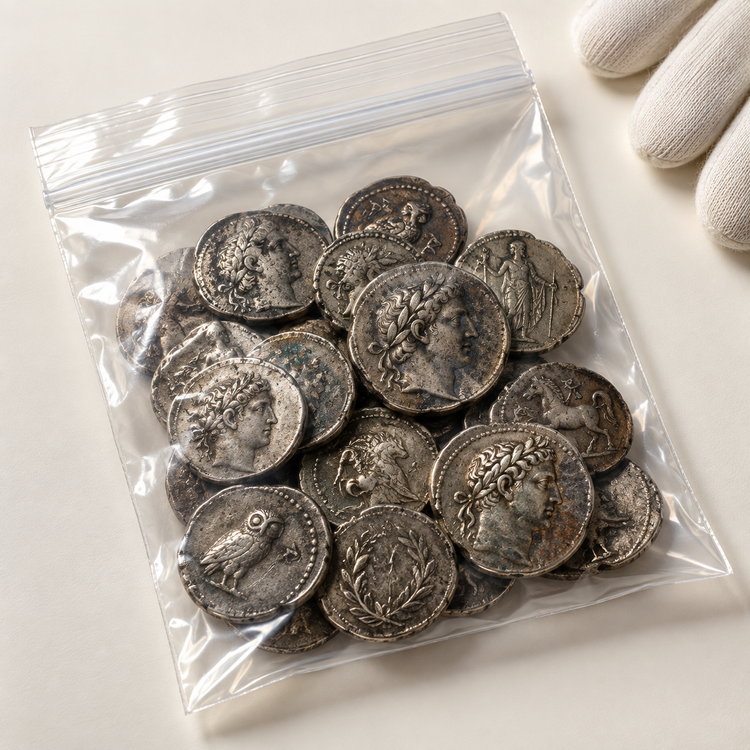
The best small resealable bags for coins are compact, clear, easy to label, and appropriately sized for the coin or its existing holder. They should keep individual inventory units separated without forcing the coin against the zipper or leaving excessive unused space.
For everyday sorting, temporary organization, retail inventory, order fulfillment, and dealer workflows, a clear resealable bag made from approximately 2–2.5 mil film can provide a practical starting point.
However, ordinary resealable bags should not automatically be treated as permanent numismatic storage. Valuable, proof, uncirculated, graded, ancient, or environmentally sensitive coins may require purpose-designed, PVC-free holders, capsules, flips, slabs, or archival enclosures.
The strongest approach is:
Identify the coin → determine whether it already has a holder → measure the complete package → choose the smallest comfortable bag → verify the material → label → test → purchase the appropriate quantity
Apple Zip Bags offers compact resealable packaging for coins, jewelry, collectibles, and other small products. The correct bag depends on whether it will be used for temporary organization, retail inventory, shipping preparation, or longer-term storage.
Quick Answer: What Are the Best Small Bags for Coins?
For general inventory and short-term organization, a strong starting point is:
A clear 2.5 mil resealable bag sized slightly larger than the coin or coin holder
Use this framework:
| Coin format | Suggested packaging approach | Main concern |
|---|---|---|
| Loose dime or small coin | Extra-small clear bag | Handling and identification |
| Loose quarter-size coin | Small clear bag | Surface contact |
| Large dollar coin | Small-to-medium bag | Diameter and weight |
| Coin in capsule | Size to capsule | Complete outside dimensions |
| Coin in cardboard 2×2 | Size to holder | Cardboard corners and label space |
| Coin in flip | Size to closed flip | Material compatibility |
| Graded slab | Larger protective bag or sleeve | Slab dimensions and scratching |
| Coin set | Individual holders plus larger grouped bag | Separation and movement |
| Coin roll | Larger, stronger package | Weight and seam stress |
| Token or medal | Size according to diameter and thickness | Irregular dimensions |
Clear bags are usually preferable for inventory because employees can verify the coin, holder, label, and quantity without opening every package.
Colored bags may help with category coding, but the color should never replace an exact written label.
Why Small Resealable Bags Work Well for Coin Organization
Coins are compact, easy to mix up, and often visually similar. Individual packaging can keep each coin or inventory unit connected with identifying information.
Small resealable bags can support:
-
Retail inventory
-
Ecommerce fulfillment
-
Temporary sorting
-
Dealer stock
-
Coin-show preparation
-
Customer orders
-
Estate inventory
-
Auction organization
-
Photography workflows
-
Coin-club exchanges
-
Tokens and medals
-
Bulk lot separation
-
Internal quality control
Apple Zip Bags markets its compact packaging for coins, jewelry, crafts, and other small items. Current product listings include 2.5 mil resealable options in clear and assorted colors.
These bags are most useful as an organizational layer. The coin may still need a proper holder inside the bag.
Best Overall Choice: Clear 2.5 Mil Resealable Bags
For many ordinary coin-business applications, a clear 2.5 mil bag provides a useful balance of:
-
Visibility
-
Flexibility
-
Label space
-
Compact storage
-
Repeated access
-
Inventory separation
-
Ease of handling
Apple Zip Bags’ jewelry and small-item bag collection includes small and large 2.5 mil bags in 100- and 1,000-count options.
Why Clear Bags Are Usually Best
Coins can differ by:
-
Denomination
-
Year
-
Mint mark
-
Country
-
Metal
-
Design
-
Finish
-
Variety
-
Grade
-
Certification status
A clear bag provides an immediate visual reference. Staff can compare the contents with the label before opening the package.
Clear bags help with:
-
Picking orders
-
Inventory audits
-
Coin-show setup
-
Photography preparation
-
Identifying empty packages
-
Verifying quantities
-
Confirming that the correct holder is present
The bag does not replace close inspection, magnification, authentication, or professional grading. It simply reduces unnecessary opening during routine handling.
Important: Ordinary Bags Are Not Automatically Coin Holders
A general-purpose resealable bag should not automatically be considered:
-
Archival
-
PVC-free
-
Acid-free
-
Airtight
-
Hermetically sealed
-
Anti-tarnish
-
Chemically inert
-
Suitable for permanent coin storage
-
Safe for every metal
-
Appropriate for proof surfaces
The U.S. Mint recommends holders made from appropriate materials and specifically warns that acid and PVC can damage coin surfaces.
For high-value or collectible coins, place the coin in an appropriate purpose-designed holder first. The resealable bag can then organize:
-
Holder
-
Inventory label
-
Certificate
-
Purchase record
-
Barcode
-
Customer reference
This keeps the bag from being the coin’s only protective layer.
Short-Term Organization vs. Long-Term Storage
The best bag depends on how long the coin will remain inside it.
Short-Term Uses
A small resealable bag can be practical for:
-
Receiving inventory
-
Sorting recent purchases
-
Preparing an order
-
Moving coins between workstations
-
Separating inexpensive circulated coins
-
Organizing photography
-
Packaging a properly holdered coin
-
Grouping related inventory
Long-Term Storage
Long-term storage requires more careful material selection.
The American Numismatic Association recommends PVC-free Mylar holders for long-term storage and warns that PVC may break down and leave damaging residue on coin surfaces.
Review the ANA’s coin-collecting storage guidance when choosing long-term holders.
If the bag manufacturer does not specifically document the material and long-term suitability, do not assume that an ordinary bag is archival.
Understanding the PVC Problem
PVC stands for polyvinyl chloride. Plasticizers may be added to PVC to make it soft and flexible.
Over time, some PVC holders can release residues that affect coin surfaces. Warning signs may include:
-
Oily film
-
Sticky residue
-
Haze
-
Pale green material
-
Surface discoloration
NGC advises collectors not to use PVC products for long-term coin storage and explains that deteriorating holders can leave damaging residue. See NGC’s guidance on recognizing coin holders that contain PVC.
Do not guess whether a flexible bag is PVC-free based only on appearance. Obtain the material specification.
What Materials Are Generally Preferred?
The Library of Congress states that polyethylene, polypropylene, and polyester storage products without additional slip or coating agents are generally considered stable and inert plastics for collection storage, while PVC and unknown plastics should be avoided.
Its general preservation guidance also notes that plastic bags and bins do not protect collections from damaging environmental extremes.
For coin applications:
-
Verify the exact material.
-
Avoid undocumented or unknown film for long-term storage.
-
Avoid PVC for permanent contact.
-
Consider purpose-made numismatic holders.
-
Use a bag as secondary organization when appropriate.
-
Consult a conservator or professional numismatist for valuable coins.
Best Bags for Loose Circulated Coins
Circulated coins intended for temporary sorting or resale may be organized in clear resealable bags.
Potential uses include:
-
Sorting by denomination
-
Separating countries
-
Organizing dates
-
Creating inexpensive lots
-
Preparing educational sets
-
Grouping tokens
-
Managing duplicate coins
Choose a bag with enough room for the intended quantity without creating excessive pressure on the zipper or seams.
Avoid overfilling. A package that closes only when compressed is too small or contains too many coins.
For collectible coins, consider placing each coin in an appropriate holder before adding it to the labeled bag.
Best Bags for Coins in Capsules
Coins in capsules should be packaged according to the outside dimensions of the capsule, not the diameter of the coin.
Measure:
-
Capsule diameter
-
Capsule thickness
-
Any tabs or hinges
-
Label dimensions
-
Required closure clearance
The bag should allow the capsule to enter without scraping tightly against the sides.
A clear bag can help keep the capsule connected with:
-
SKU
-
Coin description
-
Inventory number
-
Cost
-
Selling price
-
Customer reservation
-
Certification information
Best Bags for Coins in 2×2 Holders
Cardboard 2×2 holders are widely used in coin collecting. The bag must fit the complete holder, including:
-
Cardboard width
-
Cardboard height
-
Staples
-
Folded edges
-
Written information
-
Label or barcode
Do not size the bag to the coin diameter.
A bag that is too tight may catch on the holder’s corners or staples. Leave enough room for easy insertion without creating a large amount of unused space.
The U.S. Mint identifies cardboard and plastic 2×2 holders, capsules, tubes, sleeves, envelopes, and albums as common coin-storage options. For higher-value coins, it recommends hard plastic holders.
Best Bags for Coin Flips
Coin flips are commonly used by dealers and collectors, but their materials vary.
Before placing a coin in a flip:
-
Confirm that it is PVC-free.
-
Check whether it is designed for long-term storage.
-
Inspect it for residue or deterioration.
-
Make sure the coin cannot slide out.
-
Label the second pocket rather than placing paper against the coin.
A resealable outer bag can keep the flip and related information together, but it does not correct an unsuitable inner holder.
PCGS emphasizes that handling and storage affect coin preservation and advises collectors to be wary of soft plastic flips containing PVC. Read its guidance on coin handling and storage.
Best Bags for Graded Coin Slabs
Professionally graded coins are sealed in rigid holders, commonly called slabs.
A resealable bag or sleeve may help protect the outside of the slab from:
-
Dust
-
Light scratches
-
Label abrasion
-
Shelf contact
-
Routine handling marks
The bag must be sized to the slab, not the coin.
Measure:
-
Slab width
-
Slab height
-
Slab thickness
-
Label area
-
Any protruding edges
Do not force the slab into a tight bag. Excess pressure can damage the outer bag, complicate removal, or scratch the slab.
A standard small jewelry bag may be too compact. Consider an appropriately sized larger bag.
Apple Zip Bags offers 100-pack large 2.5 mil resealable bags for testing larger formats before purchasing higher quantities.
Best Bags for Coin Sets and Lots
Coin sets should generally be arranged to prevent uncontrolled rubbing.
Possible packaging methods include:
-
Each coin in its own holder
-
Several holdered coins in a larger bag
-
Coin set in a rigid display case
-
Tubes for appropriate bulk coins
-
Individual compartments
-
Padded presentation boxes
Avoid placing valuable unprotected coins loose together. Contact can create:
-
Scratches
-
Rim marks
-
Abrasion
-
Surface damage
-
Identification problems
If a set contains five coins, a practical system might be:
Coin → individual holder → labeled group bag → padded inner box
Best Bags for Coin Dealers
Coin dealers need packaging that supports speed, visibility, and reliable labeling.
A dealer bag should accommodate:
-
Coin or existing holder
-
SKU
-
Description
-
Year
-
Mint mark
-
Grade
-
Certification number
-
Cost
-
Retail price
-
Barcode
-
Location code
Clear bags are generally the strongest choice because staff can verify the coin without opening the package.
Colored labels can identify:
-
New inventory
-
Wholesale lots
-
Customer holds
-
Photography status
-
Auction consignments
-
Price reductions
-
Authentication review
Use bag color only as a secondary signal. The written label and inventory record remain essential.
Best Bags for Ecommerce Coin Sellers
Ecommerce sellers should prioritize:
-
Picking accuracy
-
Barcode readability
-
Compact storage
-
Product visibility
-
Consistent sizing
-
Efficient order packing
A typical workflow might be:
-
Coin enters inventory.
-
Coin is placed in an appropriate holder.
-
Holder receives an inventory label.
-
Holder and label go into a clear resealable bag.
-
Bag is stored in a coded bin.
-
Picker scans the SKU.
-
Coin is visually verified.
-
Bag is placed into protective shipping packaging.
The small bag is the inventory layer—not the complete shipping package.
Best Bags for Coin Shows
At coin shows, small resealable bags can support:
-
Temporary sorting
-
Dealer inventory
-
Customer pickups
-
Low-cost coin lots
-
Accessories
-
Tokens
-
Medals
-
Receipts and labels
For valuable coins, use secure purpose-made holders and controlled display procedures.
A colored sticker can identify whether a coin is:
-
Available
-
Reserved
-
Sold
-
Awaiting payment
-
Dealer-only
-
Part of a wholesale lot
Avoid writing directly on a bag while the coin is inside. Pressure from a pen may transfer to the coin or holder.
Best Bags for Estate Coin Inventories
Estate collections may contain:
-
Loose coins
-
Albums
-
Capsules
-
Paper envelopes
-
Slabs
-
Tubes
-
Unidentified pieces
-
Tokens and medals
Do not immediately remove every coin from its original packaging. Original holders, labels, and notes may contain useful provenance or inventory information.
Use resealable bags to keep related documentation together while the collection is evaluated.
For example:
Existing coin holder + original note + temporary inventory card → clear resealable bag
Valuable or uncertain material should be reviewed by a qualified numismatic professional.
Choosing the Correct Coin Bag Size
There is no universal coin-bag size.
Measure the complete packaged item:
-
Coin diameter
-
Coin thickness
-
Holder dimensions
-
Capsule dimensions
-
Flip dimensions
-
Slab dimensions
-
Label size
-
Insert size
-
Number of coins
-
Closure clearance
Apple Zip Bags’ packaging bag size guide explains why the complete package should be measured rather than the product alone.
Avoid Bags That Are Too Tight
A tight bag may:
-
Make insertion difficult
-
Force the coin against the zipper
-
Stress the seams
-
Catch on cardboard corners
-
Complicate removal
-
Require excessive handling
-
Damage labels
Avoid Bags That Are Too Large
An oversized bag may:
-
Allow unnecessary movement
-
Waste drawer space
-
Hide tiny coins in folded film
-
Reduce presentation quality
-
Require oversized labels
-
Complicate standardized storage
Choose the smallest bag that allows comfortable insertion, labeling, sealing, and removal.
How to Measure a Coin or Holder
Use a plastic ruler or caliper carefully, without allowing metal measuring tools to scratch the coin.
Measure:
-
Maximum width
-
Maximum height
-
Total thickness
-
Holder dimensions
-
Label requirements
-
Needed zipper clearance
If the coin is already in a holder, measure the holder.
The U.S. Mint recommends using a plastic ruler for coin inspection because metal rulers may scratch coins.
What Bag Thickness Is Best for Coins?
For many short-term inventory and packaging applications, 2–2.5 mil provides a practical starting range.
2 Mil Bags
May suit:
-
Lightweight labels
-
Temporary sorting
-
Very low handling
-
Small circulated coins
-
Coins already in protective holders
2.5 Mil Bags
May offer a useful middle ground for:
-
Regular inventory handling
-
Coins in flips
-
Coins in cardboard holders
-
Capsules
-
Tokens
-
Small coin lots
-
Retail packaging
Heavier Packaging
More substantial bags or rigid containers may be appropriate for:
-
Heavy coin lots
-
Large medals
-
Repeated handling
-
Sharp holder edges
-
Shipping
-
Valuable pieces
A thicker bag does not automatically provide archival protection. Material composition and long-term compatibility remain separate questions.
Clear vs. Colored Bags for Coins
Clear Bags
Clear is usually best for:
-
General inventory
-
Ecommerce picking
-
Visual verification
-
Photography workflows
-
Coin shows
-
Dealers
-
Collectors
-
Auctions
Colored Bags
Colored bags may help organize:
-
Countries
-
Denominations
-
Metal types
-
Workflow stages
-
Customer-owned inventory
-
Wholesale lots
-
Auction consignments
-
Reserved items
A practical system could be:
| Color | Possible purpose |
|---|---|
| Clear | General inventory |
| Blue | Customer reservations |
| Green | Ready to list |
| Yellow | Photography required |
| Red | Discrepancy or review |
| Black | Restricted-access inventory |
Do not use color alone to identify a coin. Employees and customers need written information.
What Should Go on a Coin Bag Label?
Depending on the collection or business, include:
-
SKU
-
Country
-
Denomination
-
Year
-
Mint mark
-
Variety
-
Metal
-
Grade
-
Certification service
-
Certification number
-
Quantity
-
Purchase price
-
Selling price
-
Lot number
-
Customer reference
-
Storage location
-
Special handling instruction
For uncertified coins, avoid presenting an informal opinion as a guaranteed professional grade.
Clear Bags With Inserts
A paper or card insert can provide:
-
Label support
-
Barcode area
-
Inventory notes
-
Background contrast
-
Handling structure
The insert should not rub directly against an unprotected collectible coin. Use an appropriate coin holder and verify that paper, ink, adhesives, and other materials are suitable for the intended duration.
A practical structure is:
Coin → PVC-free holder → information insert → clear resealable bag
Handling Coins During Packaging
Poor handling can damage a coin even when the packaging is appropriate.
The U.S. Mint recommends:
-
Holding coins by their edges
-
Working over a soft surface
-
Wearing soft cotton gloves
-
Avoiding fingerprints
-
Avoiding unnecessary cleaning
-
Keeping coins cool and dry
Never press fingers against the obverse or reverse surfaces of a collectible coin.
Do not breathe or talk directly over an exposed coin because moisture droplets can create spots.
Do Not Clean Coins Before Packaging
Collectors are often tempted to polish or clean coins before placing them into new bags or holders.
Improper cleaning may:
-
Scratch surfaces
-
Remove original toning
-
Leave chemical residue
-
Reduce collector value
-
Create an unnatural appearance
The U.S. Mint cautions that polishing or cleaning coins can reduce their value.
If a potentially valuable coin appears contaminated, consult a professional numismatist or coin-conservation service rather than experimenting with household cleaning products.
Temperature and Humidity Matter
A good bag cannot compensate for a poor environment.
Avoid storing valuable coins in:
-
Damp basements
-
Hot attics
-
Garages
-
Areas with rapid temperature changes
-
Locations near chemicals
-
Direct sunlight
-
High-humidity rooms
The Library of Congress warns that bags and plastic bins do not protect collections from damaging temperature and humidity extremes. Plastic used in high humidity may also increase the risk of trapped moisture.
Keep coin storage cool, dry, stable, and away from potential contaminants.
Small Bags Are Not Complete Shipping Protection
A small resealable bag does not provide sufficient protection against:
-
Crushing
-
Bending
-
Punctures
-
Impact
-
Theft
-
Moisture exposure
-
Package loss
A stronger shipping system may include:
-
Appropriate coin holder
-
Labeled resealable bag
-
Padded inner container
-
Rigid protection
-
Tamper-evident closure where appropriate
-
Durable outer mailer or box
-
Tracking
-
Insurance appropriate to the value
Do not allow loose coins to move freely inside the shipping package.
Buying 100 vs. 1,000 Coin Bags
Buy 100 When:
-
Testing a new size
-
Testing capsules or 2×2 holders
-
Launching a coin business
-
Trying a new color
-
Monthly usage is low
-
Label design is changing
-
Packaging graded slabs
-
Working with unusual medals
-
Testing storage drawers
Buy 1,000 When:
-
Bag size is proven
-
Many SKUs share the size
-
Monthly demand is predictable
-
Wholesale lots are frequent
-
You operate a coin shop
-
You sell online at steady volume
-
Smaller packs require frequent reordering
-
Labels and storage bins are standardized
Apple Zip Bags currently offers 1,000-pack small 2.5 mil bags for recurring small-item packaging requirements.
Calculate Monthly Coin-Bag Demand
Use:
Monthly coin units packaged × bags per unit = monthly bag demand
Example:
-
250 customer orders
-
Average of three individually packaged coin SKUs per order
250 × 3 = 750 bags per month
Then add:
-
Wholesale lots
-
Coin-show inventory
-
New acquisitions
-
Replacement bags
-
Photography
-
Returns
-
Samples
-
Internal sorting
-
Safety stock
A 1,000-pack may represent little more than one month of supply for an active dealer.
Standardize Core Coin-Bag Sizes
A coin business may need only a few core sizes:
Extra Small
For:
-
Loose small coins
-
Tiny tokens
-
Individual labels
Small
For:
-
Coin flips
-
Capsules
-
Compact 2×2 holders
-
Standard inventory
Medium
For:
-
Larger holders
-
Coin sets
-
Medals
-
Multiple holdered coins
Large
For:
-
Slabs
-
Larger sets
-
Documentation
-
Grouped dealer lots
Test real products before assigning hundreds of SKUs to one size.
Plain vs. Custom-Printed Coin Bags
Plain clear bags offer maximum flexibility. They work across:
-
Countries
-
Denominations
-
Years
-
Collections
-
Metals
-
Grades
-
Sales channels
Branding can be added with:
-
Logo stickers
-
Printed inserts
-
Barcode labels
-
Branded cards
-
Outer presentation packaging
Custom printing becomes more practical when dimensions, branding, and order volume are stable.
Apple Zip Bags’ guide to custom-printed versus plain jewelry bags explains the tradeoff between flexibility and brand presentation.
Common Coin-Bag Mistakes
Placing Valuable Coins Directly in Undocumented Plastic
Verify the material and use purpose-designed coin holders for long-term storage.
Assuming Every Clear Bag Is PVC-Free
Clarity does not establish material composition.
Using Bags as the Only Shipping Protection
Flexible film does not protect against impact or crushing.
Choosing Size Based Only on Coin Diameter
Include the holder, capsule, flip, label, and closure clearance.
Overfilling Bags With Loose Coins
Coin-to-coin contact may cause scratches and edge damage.
Handling Coin Faces
Hold collectible coins by their edges.
Cleaning Before Packaging
Improper cleaning can permanently affect appearance and value.
Storing Coins in Damp Locations
A bag cannot neutralize humidity and temperature extremes.
Writing on a Bag With the Coin Inside
Pen pressure may affect the coin or holder.
Using Color Instead of a Label
Every coin or lot should have exact written identification.
Buying 1,000 Before Testing
Test the actual coin, holder, label, bin, and fulfillment workflow first.
Coin-Bag Buying Checklist
Before purchasing small resealable coin bags, ask:
-
Is the coin loose or already holdered?
-
Is the bag for temporary organization or long-term storage?
-
What is the exact bag material?
-
Is it documented as PVC-free?
-
What are the coin’s dimensions?
-
What are the holder’s dimensions?
-
Is the coin valuable or certified?
-
Does it need a capsule, flip, or slab?
-
Is the bag large enough for the complete holder?
-
Is there room below the zipper?
-
Can the coin be removed without force?
-
Is the bag unnecessarily large?
-
Does the label fit?
-
Is the barcode readable?
-
Can the coin be seen?
-
Would a colored label be better than a colored bag?
-
How frequently will the package be handled?
-
Does the bag fit existing storage bins?
-
Will it be customer-facing?
-
Is additional shipping protection included?
-
Has the actual package been tested?
-
Should you begin with 100?
-
Is usage stable enough for 1,000?
Frequently Asked Questions
What are the best small resealable bags for coins?
For ordinary inventory and short-term organization, clear 2–2.5 mil resealable bags sized to the coin or existing holder can be practical. Valuable coins should generally be placed in proper PVC-free holders first.
Can I store coins directly in plastic bags?
Only when the material and intended storage period are appropriate. Do not place valuable coins into unknown plastic for long-term storage.
Are Apple Zip Bags PVC-free?
Do not assume material properties that are not clearly documented on the exact product listing. Confirm the film specification with the supplier before using any bag for long-term direct coin contact.
What size bag should I use for a coin?
Measure the complete item, including any capsule, flip, 2×2 holder, slab, label, or insert. Choose the smallest size that allows comfortable insertion and closure.
Is 2.5 mil thick enough for coins?
It can be a practical starting point for inventory organization and coins already placed in appropriate holders. Heavy lots or larger items may require stronger or rigid packaging.
Are thicker bags better for coins?
Not automatically. Thickness does not establish chemical compatibility, archival safety, or impact protection.
Are clear or colored bags better?
Clear bags are usually best for inventory verification. Colored bags can support categories or workflow status but should not replace labels.
Can I store several coins in one bag?
It may be acceptable for inexpensive circulated lots, but valuable coins should not be allowed to rub together. Use individual holders where preservation matters.
Are resealable bags airtight?
Do not assume a standard zipper bag is airtight or hermetically sealed unless the manufacturer specifically documents that performance.
Do resealable bags prevent tarnish?
Do not assume they provide anti-tarnish protection. Coin toning and corrosion can be influenced by metals, contaminants, humidity, temperature, and packaging materials.
Should I clean coins before putting them in bags?
Generally, avoid cleaning collectible coins. Improper cleaning can damage surfaces and reduce value.
Should I buy 100 or 1,000 coin bags?
Buy 100 while testing a size, material, label, or workflow. Buy 1,000 after the packaging specification is proven and monthly demand is predictable.
Can I ship a coin in only a small bag?
No. Use an appropriate coin holder, cushioning, rigid protection, and a strong outer shipping package.
How should valuable coins be stored?
Purpose-designed PVC-free flips, capsules, hard plastic holders, albums, or professional slabs are generally more appropriate than an ordinary bag alone. The American Numismatic Association provides an overview of coin-storage options.
How do I protect bags and labels during storage?
Keep them in a stable, cool, dry area away from chemicals, direct sunlight, moisture, and temperature extremes. Use organized drawers, boxes, or bins.
Final Verdict: Best Small Resealable Bags for Coins
The best small resealable bags for coins are:
-
Clear enough for visual verification
-
Compact enough for organized storage
-
Large enough for the complete coin holder
-
Substantial enough for normal handling
-
Easy to seal and reopen
-
Compatible with readable labels
-
Verified for the intended material-contact requirements
For many everyday inventory applications, clear 2.5 mil resealable bags offer a practical starting point.
However, the bag should usually be considered an organizational or secondary packaging layer. For valuable, collectible, proof, graded, or long-term holdings, place the coin in an appropriate PVC-free holder, capsule, flip, slab, or archival enclosure first.
The strongest packaging process is:
Identify the coin → determine its value and storage duration → select an appropriate coin holder → measure the complete holder → choose a resealable outer bag → label accurately → test the storage and fulfillment workflow → buy proven sizes in suitable quantities
Start with 100 bags when testing. Move to 1,000 once the size, material, label, and workflow are established.
Most importantly, never let convenience override preservation. A well-organized coin deserves packaging that supports both accurate inventory and responsible care.