
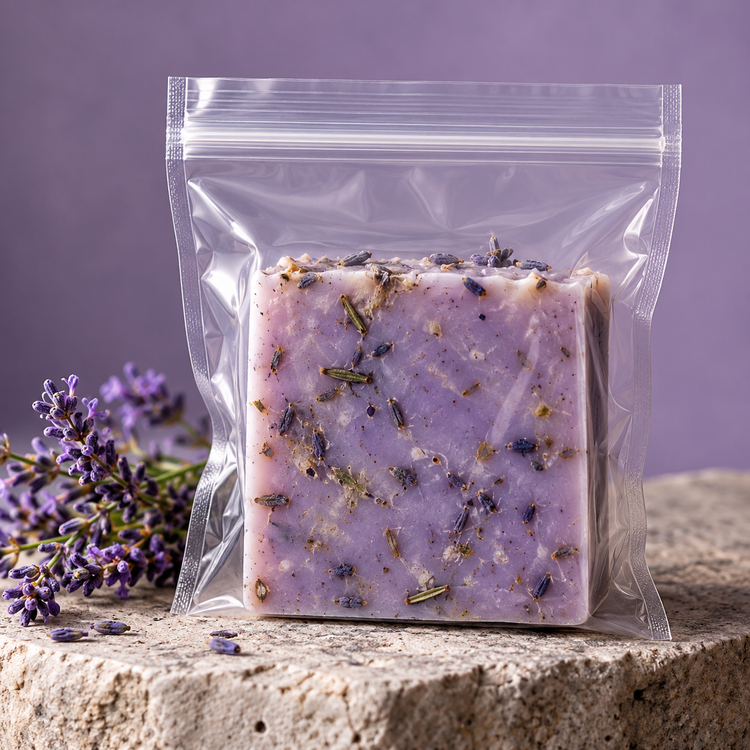
How to Choose Packaging Bags for Soap Samples
Posted by AppleZipBags Team on Oct 24th 2026
Soap samples give customers a chance to discover a fragrance, inspect a design, and try a product before purchasing a full-size bar. The packaging should make that introduction easy: the sample stays identifiable, looks presentable, and can be removed comfortably.
But choosing a bag involves more than finding one that fits. A cold-process sample and a melt-and-pour sample may need different wrapping arrangements, even when their dimensions are identical.
Choose packaging bags for soap samples by starting with the formulation, then checking material compatibility, usable dimensions, closure, label space, and purchasing quantity. Test the complete package under representative conditions before ordering in volume.
This guide explains how to build a practical packaging system for individual samples, market giveaways, and multi-fragrance assortments.
Soap Sample Packaging: What to Check First
| Decision | What to Establish |
|---|---|
| Soap type | Cold process, melt and pour, or another formulation |
| Packaging role | Direct-contact wrapping or an outer organizational bag |
| Product readiness | Appropriate curing, cooling, or hardening completed |
| Size | Comfortable fit around the complete wrapped sample |
| Material | Compatibility with the actual formulation |
| Closure | Easy operation without pressing against the soap |
| Label | Readable identification and appropriate product information |
| Quantity | Realistic demand for each packaging format |
Once you know these requirements, compare options in the Apple Zip Bags collection.
1. Start with the Soap Formulation
The formulation determines what the packaging needs to accommodate.
Cold-Process Soap
Cold-process soap should complete its appropriate curing process before final packaging.
Bramble Berry’s explanation of soap curing describes the water loss and changes that occur during this stage. Follow a curing process appropriate to your recipe and conditions.
Do not place newly made samples in sealed bags as a substitute for curing. Assess the finished soap and intended storage arrangement before choosing final packaging.
Melt-and-Pour Soap
Melt-and-pour soap has different moisture considerations.
Glycerin can attract moisture from the surrounding air, resulting in surface droplets known as glycerin dew. Soap Queen’s guide to explaining and preventing glycerin dew discusses this behavior and wrapping considerations.
Follow the soap-base supplier’s recommendations. A general-purpose zipper bag should not automatically be treated as equivalent to the recommended primary wrapping.
2. Decide Whether the Bag Is Primary or Outer Packaging
This distinction makes product selection clearer.
Primary Packaging
Primary packaging directly contacts the soap.
Its material and performance need to suit the formulation, surface, fragrance, and expected storage period.
Ask the supplier about the proposed application, then test the actual soap.
Outer Packaging
An outer bag can group individually wrapped samples with a product card.
This is useful for:
-
Discovery sets.
-
Event giveaways.
-
Customer order samples.
-
Gift assortments.
-
Wholesale presentation kits.
The individual wrapping addresses each soap’s needs, while the outer bag keeps the assortment together.
3. Measure the Complete Wrapped Sample
Measure after adding any primary wrapping.
Include:
-
Width.
-
Height.
-
Depth.
-
Raised decoration.
-
Labels.
-
Backing cards.
-
Other samples sharing the bag.
Account for Depth
A flat bag changes shape around a thick sample. As the soap expands the film, it reduces the space available across the bag’s width and height.
Do not select a size from the bar’s face dimensions alone.
Protect Decorative Details
Raised flowers, textured tops, and sharp corners may catch on a narrow opening.
Test insertion and removal without forcing the sample or compressing its design.
Leave the Closure Clear
The zipper should operate without pressing against the soap.
If you must squeeze the product to close the packet, choose a larger size or a different arrangement.
For smaller trials, review the 100-pack small-size bag options. Confirm the selected variant’s usable dimensions and pack count.
4. Check Material Compatibility
Fragrance, oils, colorants, surface texture, and storage conditions can affect how soap interacts with packaging.
A bag’s clarity or thickness does not establish compatibility.
Test the Actual Formulation
Package samples using the materials you intend to purchase, including labels and any inner wrapping.
Inspect for:
-
Film distortion or softening.
-
Soap sticking to the packaging.
-
Color transfer.
-
Surface moisture.
-
Label lifting.
-
Changes in appearance.
-
Unexpected fragrance changes.
A short fitting exercise cannot establish performance over a longer distribution period.
Soap Queen’s guidance on storing handmade bath products explains why storage conditions matter to product quality.
5. Choose Visibility Around the Presentation
Clear Bags
Clear packaging lets recipients see the sample’s color, shape, and design.
It can be useful for swirls, layers, and decorative miniature bars. Position the label so the product remains visible.
Colored Bags
Colored outer packaging can distinguish assortments or seasonal collections.
Use written product names alongside the color system so recipients can identify samples after opening.
Printed Bags
Printed designs can contribute to presentation, but test the filled package.
A pattern may obscure pale soap or compete with a small label. Compare the design against the actual sample rather than judging the empty bag.
Browse the small bag range with design selections for formats to evaluate.
6. Assess Thickness Alongside Construction
Film thickness is commonly measured in mils.
One mil equals one-thousandth of an inch.
Apple Zip Bags lists 2.5 mil products among its options. Thickness is one specification to consider alongside material, seams, closure, and fit.
A thicker bag does not automatically establish moisture-barrier performance, fragrance retention, or formulation compatibility.
Test how the complete packet handles during filling, storage, and opening.
7. Follow Appropriate Wrapping Guidance
Melt-and-pour samples may need suitable primary wrapping before being placed in an outer bag.
Wholesale Supplies Plus provides melt-and-pour packaging FAQs addressing common formulation and packaging questions.
Bramble Berry’s explanation of shrink wrapping also distinguishes wrapping approaches for different soap types.
Use guidance relevant to your specific base and packaging material. Ensure the soap has cooled and hardened appropriately before wrapping.
8. Plan Labels Before Finalizing the Bag
A sample should remain identifiable after it leaves the outer assortment.
Keep the product name with each individual sample.
Your packaging arrangement may need space for:
-
Brand name.
-
Product or fragrance name.
-
Batch reference.
-
Relevant use information.
-
Other product information appropriate to the market.
Finalize the label and any information card before choosing the bag size. A larger card can change the required dimensions.
For presentation ideas, explore Soap Queen’s soap packaging resources.
9. Test Mixed-Fragrance Sets Together
A zipper closure does not necessarily prevent fragrance migration.
If several scents share one outer bag, test the complete assortment over its intended storage period.
Do not assume individually bagged samples will remain completely isolated from one another.
Keep each sample clearly identified and use primary packaging suited to the formulation.
For larger assortments, measure the combined wrapped samples and card before selecting from the large resealable bag collection.
10. Choose Quantities After Testing
Buy around a proven package rather than an unfinished idea.
Start Smaller When Requirements Are Changing
A smaller purchase suits:
-
New sample dimensions.
-
Unfinished label designs.
-
Limited events.
-
Compatibility trials.
-
Several formulations needing different formats.
Order More When the Format Is Established
A larger supply becomes practical when the bag works and demand is predictable.
Calculate each size separately.
For example, 100 assortments containing four individually packaged samples and one outer bag require:
| Packaging Component | Quantity |
|---|---|
| Individual sample packages | 400 |
| Outer assortment bags | 100 |
Compare delivered cost per bag, including applicable shipping, taxes, and discounts.
11. Assess Shipping Separately
A bag that presents a sample neatly may still require additional protection during transport.
Flexible film does not prevent crushing or chipped decorative edges.
Test the complete shipping arrangement, including cushioning and the outer mailer or box. Keep heavy items from pressing directly against delicate samples.
A Practical Packaging Trial
Before committing to a larger order:
-
Prepare the soap appropriately for its formulation.
-
Apply any required primary wrapping.
-
Add identification and information cards.
-
Check comfortable insertion and closure.
-
Store under representative conditions.
-
Inspect periodically for changes.
-
Test opening and removal.
-
Evaluate shipping separately if applicable.
Record the formulation, packaging specification, and observations so you can reproduce a successful arrangement.
Common Mistakes to Avoid
Packaging Before the Soap Is Ready
Complete the appropriate curing, cooling, or hardening process.
Measuring the Soap Without Its Wrapping
Include the complete package.
Choosing by Thickness Alone
Assess material, construction, compatibility, and fit together.
Assuming Fragrance Isolation
Test mixed assortments rather than relying on the zipper.
Crowding the Label
Plan readable information before finalizing dimensions.
Buying Bulk Before Testing
Confirm the product and packaging perform together first.
Frequently Asked Questions
What bags work best for soap samples?
Choose bags that fit comfortably and suit the formulation and packaging role. Clear resealable bags can be useful as outer packaging around appropriately wrapped samples.
Can soap touch the bag directly?
That depends on the formulation and specific packaging material. Obtain relevant information and test the actual product.
Should cold-process samples cure before packaging?
Complete the appropriate curing process before final packaging.
Can melt-and-pour samples go directly into zipper bags?
Follow the base supplier’s wrapping guidance. General-purpose zipper bags should not automatically replace recommended primary wrapping.
What size should I buy?
Measure the complete wrapped sample, including depth, decoration, labels, and inserts. Test loading and removal.
Will a resealable bag keep fragrances separate?
Do not assume so. Test the actual samples and packaging together.
When should I order larger quantities?
After fit and compatibility trials are complete and usage is reasonably predictable.
Build the Package Around the Finished Sample
Start with the soap’s formulation, then assess wrapping, dimensions, labels, and handling as one complete arrangement.
A successful sample package makes the product easy to identify and comfortable to open while meeting its actual storage needs. For material and sizing questions, contact Apple Zip Bags with your intended application and sample dimensions.