
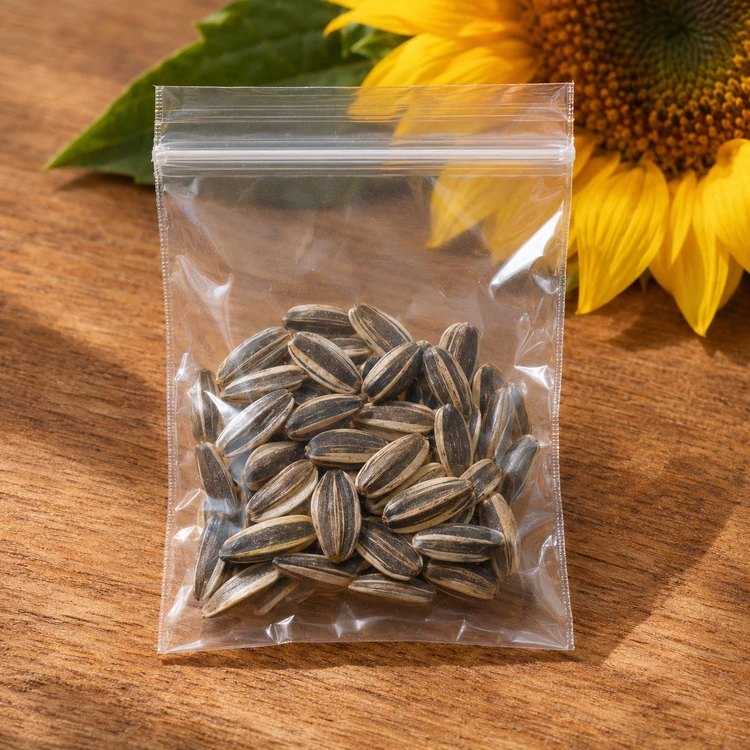
How to Choose Packaging Bags for Seeds
Posted by Apple Zip Bags on Nov 6th 2026
Choose seed packaging by testing the actual seed count, label, and closure together. A packet of 25 basil seeds may need more room for the label than for the seeds. A packet of 25 beans needs enough space below the zipper for the seeds to settle without pushing against the seams.
Start with the job the bag needs to do. A resealable packet can keep varieties separate at a seed swap or inside a planting kit. If you’re saving seeds for future seasons, plan the storage conditions and outer container as well. You can browse small resealable bags from Apple Zip Bags to compare compact formats.
1. Decide Whether You’re Packing Seeds to Share, Sell, or Store
| Use | What to prioritize | What to test |
|---|---|---|
| Seed swaps | Clear identification and easy opening | Can someone identify the variety after taking it out of the display? |
| Planting kits | Consistent packet size and a readable label | Do all the packets fit without folding across the zippers? |
| Small retail packets | Reliable closure and room for applicable label information | Does the full label fit on the filled bag? |
| Saved seed collections | Separate varieties and appropriate outer storage | Are the seeds suited to dry storage, and can you keep them cool and dry? |
This guide focuses on common garden seeds for planting. Some species lose viability if dried, so check species-specific instructions before using the same process for unfamiliar seeds. The USDA’s seed storage guidance explains the distinction between seeds that tolerate drying and those that don’t. www.ars.usda.gov
2. Test Usable Bag Size With the Actual Portion
Check the opening width between the seams and the usable height below the zipper. Ask whether the listed dimensions include the header above the closure. Then count out one full portion and fill the bag with the tool you’ll use for the whole run.
- Tiny seeds: Check whether they cling to the film, get caught at the ends of the zipper, or remain in the corners when poured. Try a folded paper chute for filling and pour over a tray to see how easily the seeds come out.
- Large or flat seeds: Check that beans, peas, or squash seeds settle below the zipper without stretching the film. If you need to push them down to close the bag, try a wider format.
- Mixed kits: Pack the finished assortment into its outer bag or carton. A row of individually well-fitting packets can still make the finished kit too bulky.
Use a 100-count pack of small resealable bags to test the format before scaling up. For larger seeds or bundles of several packets, compare the larger resealable bag options.
3. Choose Film and a Closure That Hold Up During Handling
Film thickness is one useful comparison. For example, 2.5 mil equals 63.5 micrometers, using the NIST conversion for mils. Check the filled packet for seam strain, punctures, and gaps at the ends of the zipper. Thickness alone does not establish how well a finished bag performs. www.nist.gov
For mailing, test the packed mailer, not just the loose packet. If hard seeds can be crushed or pressed into the film, add suitable outer protection. If tiny seeds escape during handling, inspect the zipper for trapped seeds or chaff before deciding whether to change the bag.
4. Match the Storage Method to the Seeds
For common garden seeds that tolerate drying, clean and dry them according to the crop’s instructions before closing them in plastic. A zipper keeps varieties separate, but it won’t remove moisture already inside. Accu-Seal’s packaging FAQ also notes that moisture can pass through common polyethylene and polypropylene films over time. accu-seal.com
For seeds you plan to save across seasons, the University of Minnesota Extension guide to saving vegetable seeds recommends cool, dry storage in tightly sealed glass containers. It suggests grouping labeled paper packets inside one container. If you’re packing older seeds for a swap or kit, Utah State University Extension’s germination test can help you check a representative sample first. extension.umn.edu
5. Check Label Space Before Ordering in Bulk
Apply the label to a filled packet. Make sure it lies flat, the variety is easy to read, and the zipper remains accessible. For personal seed saving, start with the crop, variety, and collection date. For sales, confirm what rules apply before printing labels in bulk. The USDA Agricultural Marketing Service’s Federal Seed Act overview explains that federal truth-in-labeling rules cover agricultural and vegetable seed shipped in interstate commerce. Agricultural Marketing Service
Once you’ve tested the exact format, count demand by size and color. For example, 150 kits with three compact packets and one wider packet need 450 compact bags and 150 wider bags before packing extras. Compare 1,000-count small bag options if the compact format will carry over to future runs. For recurring orders, send your quantities by variant through the Apple Zip Bags wholesale inquiry form.
Frequently Asked Questions
Can I use the same bag for lettuce seeds and beans?
Yes, if the same format is easy to fill and empty for both, closes without strain, and leaves room for a readable label. Test the smallest and largest seeds before standardizing.
Are paper packets or zip bags better for seeds?
Zip bags are convenient for visible sorting and repeated access. Paper packets are a practical option when you’re grouping dry seeds inside a tightly sealed outer container or when tiny seeds are awkward to pour from plastic.
What should I measure before buying seed bags?
Measure the space your full portion needs below the zipper, the opening width needed for your filling tool, and the flat area needed for the label. Contact Apple Zip Bags with your seed type, count per packet, and label dimensions to narrow down which format to test.