
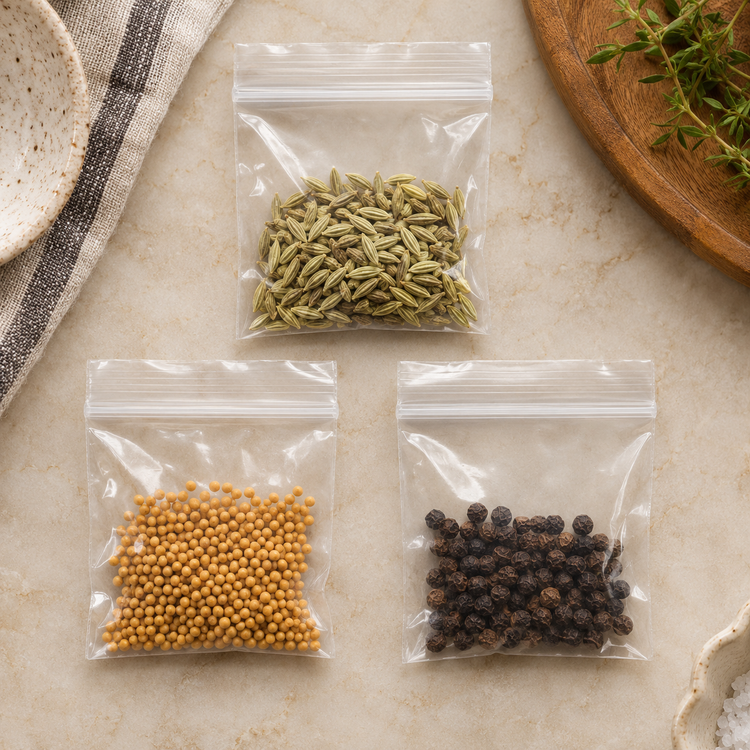
Clear or Colored Bags for Spices: What Works Best?
Posted by Apple Zip Bags on Nov 6th 2026
Choose clear bags when customers need to see the spice, tinted bags when your team needs to sort blends quickly, and opaque packaging when limiting light exposure matters. A tinted zipper bag can make a sampler easier to assemble, but its color alone doesn’t tell you how well it blocks light, moisture, or oxygen.
Think about where the packet will spend most of its time. Clear packaging can show off the texture of Aleppo pepper at a tasting table. The same packet may need a different setup if it will sit under retail lighting for weeks. Browse the Apple Zip Bags small resealable bag collection to compare compact formats, and confirm the exact variant’s suitability before using it for direct contact with spices.
Clear vs. Colored Spice Bags at a Glance
| Bag format | Best for | What to check |
|---|---|---|
| Clear | Showing whole spices, grind size, and visible blend ingredients | Glare, label placement, and exposure to light |
| Translucent or tinted | Sorting blends by heat level, flavor, or product line | Whether the colors remain distinct after filling |
| Opaque | Limiting light exposure or giving different blends a uniform appearance | Light transmission and separate moisture and oxygen barrier specifications |
| Clear inner bag with an opaque carton | Showing the spices when a sampler box is opened | How long packets sit outside the closed carton |
When Clear Bags Work Best for Spices
Clear bags work well when the product’s appearance answers a customer’s question. Shoppers can see whether pepper is cracked or finely ground, recognize whole cardamom pods, or see the flakes and seeds in a seasoning blend. For a tasting kit, that visibility also makes it easier to compare samples side by side.
Apply the label to a filled bag before settling on a design. Pale lettering may look good against turmeric and disappear against a dark rub. An opaque label with high-contrast text can keep the blend name readable while leaving a window for the contents.
Use the 100-count small bag options to compare presentation before placing a larger order. For bulky blends or sets of already wrapped spice packets, check the larger resealable bag formats so the label can sit flat and the zipper stays accessible.
When Colored Bags Make More Sense
Tinted bags can reduce mix-ups when several blends look alike. A mild taco seasoning and a hot version may be hard to distinguish by sight, but a consistent color system can help staff pack the right one. Pair the color with a printed name or code so customers can identify the packet after it’s separated from the kit.
Test the tint with the actual spice inside. A dark blend can make two colors look nearly identical, especially under warm lighting. Before ordering 1,000-count small bags, compare the filled variants under the lighting you use for packing or display.
Does Darker Packaging Keep Spices Fresher?
A darker bag can reduce light exposure if the material actually blocks light. Ask for light transmission data when it matters, rather than judging by appearance. A study on paprika pigments examined how fluorescent light and packaging conditions affected pigment breakdown in paprika powder. It’s a useful reason to test the actual package for color-sensitive spices rather than assume a tinted bag will preserve their appearance. pubmed.ncbi.nlm.nih.gov
Evaluate moisture and oxygen protection separately. Accu-Seal’s packaging FAQ explains that oxygen and moisture can pass through common polyethylene and polypropylene films over time. If you’re packing aromatic spices for longer storage, ask for the film’s barrier specifications and test the finished packet over the period you expect it to be used. accu-seal.com
Storage conditions still matter after opening. McCormick’s spice storage guidance recommends keeping spices in a cool, dry cupboard away from the sink or range and avoiding dispensing directly over steam. A brief storage note can help customers who will use a resealable packet more than once. www.mccormick.com
Check the Exact Bag Before Ordering
- Confirm suitability for direct food contact. Ask for documentation covering the exact clear, tinted, or printed variant and the intended conditions of use. The FDA’s food-contact material guidance explains why the components and conditions matter. www.fda.gov
- Read the label on the filled packet. Check contrast, wrinkles, and clearance around the zipper. Use the FDA Food Labeling Guide as a starting point and verify the current requirements for your product and distribution format. www.fda.gov
- Test the closure and presentation together. Check for powder in the zipper and whether the packet still looks good after handling. If you need visible evidence of first opening, evaluate a compatible pouch designed with a heat-sealable header above the zipper. Bag color does not provide that feature. www.rightpak.co.uk
Frequently Asked Questions
Are clear bags good for ground spices?
They can be useful when customers want to see the color or grind. Test whether the powder fills cleanly and stays out of the zipper, and check whether the bag provides the protection you need for the intended storage period.
What color bag is best for paprika?
If customers need to see the paprika, consider clear packets kept inside an opaque carton until display or use. If packets will sit under lighting for an extended period, compare opaque packaging with documented light protection.
Can I use color to identify heat levels?
Yes. Use a consistent color scheme and print mild, medium, or hot on each packet. That way, the distinction remains clear under different lighting and after the packets are removed from the kit.
For recurring sampler runs, submit an Apple Zip Bags wholesale inquiry with quantities by size and color. If you’re comparing clear and tinted options for a specific blend, contact Apple Zip Bags with the spice type, portion size, and planned storage conditions.