
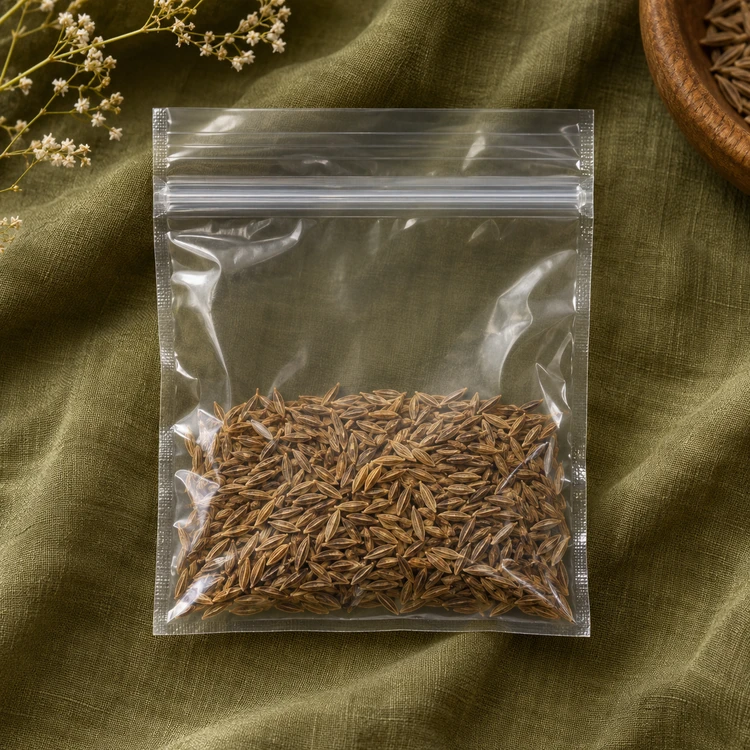
Clear or Colored Bags for Seeds: What Works Best?
Posted by AWS Team on Nov 6th 2026
Choose clear bags when you need to see the seeds and colored bags when you need to sort packets quickly. Clear bags make it easier to spot an empty packet at a seed swap. Tinted bags can help a packing team tell three similar-looking varieties apart. For seeds you’ll keep across seasons, prioritize the right storage conditions over bag color.
The Apple Zip Bags small resealable bag collection is a starting point for comparing formats. Test the color with your actual seeds and label before buying in bulk: a tint that looks distinct on an empty bag can be harder to recognize once the bag is filled.
Clear vs. Colored Seed Bags at a Glance
| Bag format | Best for | What to check |
|---|---|---|
| Clear | Seed swaps, visual fill checks, and showing seed size or shape | Whether the label stays readable against the seeds |
| Translucent or tinted | Sorting crops, varieties, or kit components | Whether the tint remains easy to distinguish under actual lighting |
| Opaque | A uniform appearance or limiting light exposure | Whether you can verify the contents without opening and whether the material provides any required light protection |
| Labeled inner packets in an outer container | Keeping varieties separate in a saved-seed collection | Whether the outer container and storage conditions suit the species |
When Clear Bags Work Best for Seeds
Clear resealable bags are useful when visibility saves a step. At a swap, people can see whether a packet contains large beans or tiny lettuce seeds. At a packing table, staff can spot a missed fill or check whether seeds have lodged in the zipper. Use a separate counting step when every packet must contain a specific number; overlapping seeds can be difficult to count through the film.
Leave a small viewing area when placing the label. For a pilot run, compare the 100-count small resealable bag options. If beans or squash seeds crowd the zipper or make the label wrinkle, test one of the larger resealable bag formats before changing the label design.
When Colored Bags Make Packing Easier
Use tint to give staff a quick visual cue. A garden starter kit could use green for herbs, amber for vegetables, and blue for flowers. If the kit contains two varieties of the same crop, print the variety name on each packet so the recipient can still tell them apart after unpacking.
Use color as a second identifier. A blue packet can signal “flowers,” but the written label should tell the customer it contains calendula. For saved seeds, the University of Minnesota Extension seed-saving guide recommends recording the seed name, variety, and collection date. extension.umn.edu
Before committing to 1,000-count small bags, lay out the filled packets under the lighting you actually use. Ask someone who didn’t pack them to match each packet to its kit slot. If the person has to hold two colors side by side to tell them apart, choose more distinct tints or make the printed identifiers easier to scan.
Do Darker Bags Keep Seeds Viable Longer?
Bag color alone doesn’t tell you how long seeds will stay viable. If you need light protection, ask about the finished bag’s light transmission. Evaluate moisture protection separately: Accu-Seal’s packaging FAQ explains that moisture can pass through common polyethylene and polypropylene films over time. accu-seal.com
For common vegetable seeds that tolerate drying, follow the crop’s drying instructions and use cool, dry storage. If you’re saving several varieties, labeled paper packets inside a tightly sealed glass container are one option recommended by University of Minnesota Extension. Some species lose viability if dried, so consult the USDA’s seed storage guidance before applying the same method to unfamiliar seeds. extension.umn.edu
When comparing clear and tinted versions, confirm that the film thickness is comparable. A specification of 2.5 mil equals 63.5 micrometers, using the NIST unit conversion tables. That measurement describes thickness; it doesn’t establish light or moisture protection. www.nist.gov
Check the Label Before Ordering in Bulk
Apply the final label to a filled bag. Check that the text stays readable against both light and dark seeds, the label lies flat, and the zipper remains accessible. If you sell seeds, confirm the applicable labeling requirements before printing. The USDA’s Federal Seed Act overview explains that federal truth-in-labeling rules cover agricultural and vegetable seed shipped in interstate commerce. www.ams.usda.gov
If you’re assembling kits with older seed stock, test a representative sample before packing the full run. Utah State University Extension’s germination test guide explains how to run a paper towel test and calculate the percentage that sprout. extension.usu.edu
Frequently Asked Questions
Are clear bags better for seed swaps?
Clear bags make the contents visible and simplify basic fill checks. Use a readable label even when the seeds are easy to see, since different varieties can look alike.
Can I use one bag color for each planting season?
Yes. Color can help group spring and fall kits, while a printed crop name and planting directions tell recipients what to do with each packet.
Should I buy clear or tinted bags in bulk?
Buy clear if you need one flexible format for several uses. Buy tinted when you have a consistent sorting system and enough demand for each color. Send your quantities by size and color through the Apple Zip Bags wholesale inquiry form, or contact Apple Zip Bags to compare options for your seed count, label dimensions, and kit layout.