
Clear or Colored Bags for Diamond Painting Pieces: What Works Best?
Posted by AppleZipBags Team on Oct 23rd 2026
A collection of diamond painting drills can grow quickly. Each new canvas adds more colors, leftover packets, and tiny pieces that need accurate identification. Choosing suitable bags helps keep those supplies manageable.
But should you choose clear bags or colored bags?
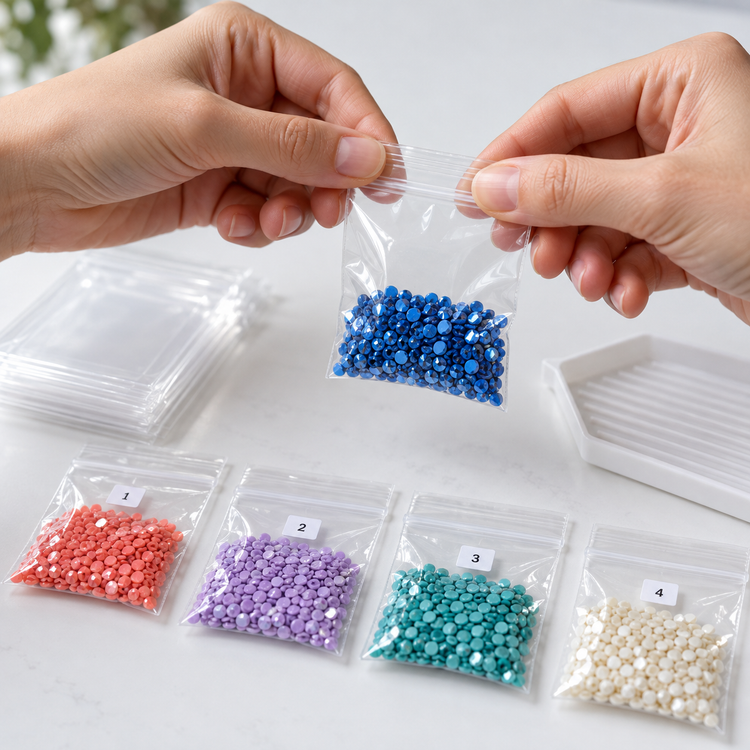
Clear bags are usually best for individual diamond painting colors because they make drills and labels easy to see. Colored bags are useful for separating projects, kit versions, or storage categories. For many hobbyists, clear inner packets inside a labeled outer project bag provide a practical combination.
The most important consideration is how quickly you can find the correct packet and return it without losing its identity.
Clear vs. Colored Drill Bags: Quick Comparison
| Consideration | Clear Bags | Colored Bags |
|---|---|---|
| Recognizing contents | Usually easiest | Depends on tint and opacity |
| Reading labels | Convenient when labels face outward | External labels may be necessary |
| Comparing shades | Less interference from packaging color | Tinted film can change apparent shades |
| Grouping projects | Works with written project labels | Adds a visual category cue |
| Checking remaining supplies | Contents are visible | May require opening |
| Organizing leftovers | Useful for individually identified portions | Useful for outer groups |
| Durability | Depends on construction | Depends on construction |
| Light protection | Should not be assumed | Should not be assumed without specifications |
Choose visibility for individual supplies and color where it communicates a useful category.
Why Clear Bags Work Best for Individual Colors
You Can Identify Packets Without Opening Them
Clear packaging lets you see the general drill color and read its identifying information.
This helps when:
-
Gathering colors for a canvas.
-
Checking leftover supplies.
-
Finding a reserve packet.
-
Returning unused drills.
-
Checking that a project group is complete.
The Apple Zip Bags collection offers formats to compare once you know your required dimensions and visibility needs.
Labels and Contents Stay Connected
A color number is more useful when you can see the material it identifies.
Position the label so it remains readable without covering the entire packet. Keep enough visible space to recognize the general color and check the contents.
Diamond Art Club’s diamond painting storage tips discuss keeping colors organized and labeled according to project instructions.
Remaining Quantities Are Easier to Assess
Clear bags make it easier to notice whether a packet is nearly empty or still contains a substantial reserve.
Treat this as a visual check rather than an exact count. If you need precise inventory, record the quantity using an appropriate method.
Do Not Rely on Appearance Alone
Clear bags improve visibility, but they do not replace accurate identification.
Neighboring shades may look very similar. Reflections, lighting, and the plastic itself can affect appearance.
When checking a possible match:
-
Read the supplied reference.
-
Confirm the project or supplier.
-
Check drill shape and finish.
-
Inspect the actual pieces outside the bag if necessary.
-
Keep uncertain matches separate.
Avoid combining leftovers solely because they look alike through packaging.
When Colored Bags Are More Useful
Colored bags work best when their color has a defined purpose.
Separating Active Projects
Assigning a different outer bag color to each canvas can make projects easier to recognize.
For example:
| Outer Bag Color | Example Assignment |
|---|---|
| Blue | Landscape project |
| Pink | Floral canvas |
| Green | Holiday design |
| Purple | Gift project |
| Clear | General reserve supplies |
These are example assignments. Add a written project name so the system remains understandable without a color key.
Distinguishing Kit Versions
Workshop organizers or kit packers can use colored outer packaging to distinguish different activities.
A written kit reference and contents checklist should still verify what belongs inside.
Separating Storage Categories
Color can identify broad groups such as:
-
Active projects.
-
Completed-project leftovers.
-
Supplies awaiting identification.
-
Materials reserved for a group activity.
Keep the number of categories manageable. A simple system is easier to maintain.
For a smaller purchasing format to evaluate, compare the 100-pack small-size bag options. Confirm the selected style, dimensions, and quantity.
Understand Tinted, Opaque, and Printed Packaging
“Colored bags” can describe several different levels of visibility.
Transparent Tinted Bags
Tinted film allows some view of the contents while adding a color cue.
However, it can change the apparent shade of the drills. A blue tint may make a neutral or pale color harder to recognize accurately.
Use the label to identify the contents and remove pieces from the packaging for close comparisons.
Opaque Bags
Opaque packaging hides the contents.
This can work for labeled project groups, but individual drill colors become harder to check without opening the packet.
External identification is essential.
Printed Bags
Printed patterns may leave portions of the contents visible.
Check the finished packet rather than judging the empty bag. A pattern can obscure small numbers or make a pale drill color difficult to see.
The small bag range with design selections provides formats to compare against your label and visibility requirements.
A Practical Combination: Clear Inner Bags and Colored Outer Bags
This arrangement gives each layer a clear role.
Clear Inner Bags Identify Individual Supplies
Keep each separately identified color in its own packet.
Include the supplied reference, shape, and finish information where relevant.
The Outer Bag Identifies the Project
Group the inner packets with a project label or inventory sheet.
Choose enough space for comfortable loading and removal. For larger groups, compare the dimensions in the large resealable bag collection.
The Storage Box Keeps Everything Accessible
Place grouped packets inside a supportive organizer rather than leaving them loose in a drawer.
DiamondPainting.com’s guide to organizing diamond drills discusses labeled bags and compartmental storage approaches.
What to Put on Each Label
A useful label preserves more than the visible color.
Include:
-
Supplier or kit brand.
-
Project name.
-
Color code exactly as supplied.
-
Canvas symbol, where useful.
-
Round or square shape.
-
Special finish, if applicable.
Keep Symbols Separate from Color Codes
A symbol belongs to a particular project’s legend. It may mean something different on another canvas.
Retain the supplied reference and project identity alongside it.
Label Before Transferring
Prepare the new label before opening the original packet.
Move one identified color at a time. This reduces the chance of separating drills from their references.
Keep Shape and Finish Separate
Bag color should not be the only way you distinguish different drill types.
Keep round and square pieces separately identified. Preserve distinctions between ordinary and specialty finishes.
If two leftover packets carry similar references, check their physical compatibility before combining them.
When uncertain, keep the original packets separate.
Bag Color Does Not Determine Strength
Clear, tinted, and opaque bags can differ in construction.
Compare:
-
Material.
-
Film thickness.
-
Seams.
-
Closure.
-
Usable dimensions.
-
Intended fill.
Apple Zip Bags lists 2.5 mil products among its options. Thickness is one specification to evaluate alongside the complete packet.
Test the selected format with a realistic portion. Check the opening, pouring, refilling, and closure.
Do Colored Bags Protect Drills from Light?
Do not assume that a visible tint provides verified light protection.
Color, opacity, and tested filtration are different properties. Without relevant specifications, choose packaging for organization and use appropriate closed storage between sessions.
Follow the kit supplier’s recommendations where provided.
Bags or Containers for Active Colors?
Clear bags can work well for reserves and leftovers. Rigid containers may be more convenient for colors you access repeatedly during a session.
For examples of alternative formats, compare ARTDOT’s diamond painting storage containers.
Diamond Art Club’s storage organizers and containers provide another reference for structured storage.
If a working container and reserve bag hold the same supply, label both consistently.
Choose Size Before Appearance
An attractive bag is less useful if it makes transfers awkward.
Check that the packet:
-
Holds the intended portion comfortably.
-
Leaves clear space below the zipper.
-
Works with your tray or funnel.
-
Fits inside the organizer.
-
Provides enough label space.
A large quantity may be easier to handle in two matching labeled packets than in one overfilled bag.
For tools and trays that may affect your setup, browse examples of diamond painting accessories.
Keep Small Pieces Securely Stored
Close packets after handling and check the work surface for spills.
Keep drills and loose packaging away from young children and animals. Store supplies in a designated location.
The U.S. Consumer Product Safety Commission’s small-parts guidance provides information relevant to small parts in children’s products.
Test Your System with One Project
Before buying a large supply, organize one representative canvas.
Step 1: Prepare Accurate Labels
Record the supplied references and any relevant distinctions.
Step 2: Package Each Color
Choose comfortable fill levels and inspect closures.
Step 3: Group the Project
Use an outer bag or organizer with a written project label.
Step 4: Try a Working Session
Retrieve colors, pour drills, return leftovers, and repack.
Step 5: Adjust the Arrangement
Change the bag size, label placement, or category colors before expanding the system.
Common Mistakes to Avoid
Using Color Without Written Identification
A colored bag should support a label, not carry all the information.
Comparing Shades Through Tinted Film
Inspect the actual pieces when close matching matters.
Creating Too Many Categories
Start with a few practical groups.
Choosing Printed Designs That Hide References
Test the filled packet’s readability.
Overfilling Bags
Leave enough room for opening, refilling, and closure.
Combining Uncertain Leftovers
Preserve separate packets when compatibility is unclear.
Frequently Asked Questions
Are clear or colored bags better for diamond painting pieces?
Clear bags are usually better for individual colors. Colored bags can help identify project groups or storage categories.
Can tinted bags change how drills look?
Yes. Tinted film can alter apparent shades. Use written references and inspect actual pieces for close comparisons.
Should every color have a separate packet?
Keep separately identified colors apart. Larger quantities may require several packets with matching labels.
Are opaque bags useful?
They can work for labeled outer project groups, but they make individual contents harder to inspect.
Do colored bags prevent fading?
Do not assume so without relevant product specifications.
Should I use bags or containers?
Bags can suit compact reserves and leftovers. Containers may be more convenient for frequently accessed active colors.
Can I combine leftover drills with the same code?
Check supplier, shape, finish, appearance, and fit first. Keep uncertain matches separate.
Make Individual Colors Visible and Projects Easy to Find
Clear bags help you identify drills. Colored outer bags can make complete projects easier to recognize.
Start with readable labels, a comfortable fit, and a simple category system. For help comparing formats, contact Apple Zip Bags with your intended contents, dimensions, and expected quantity.