
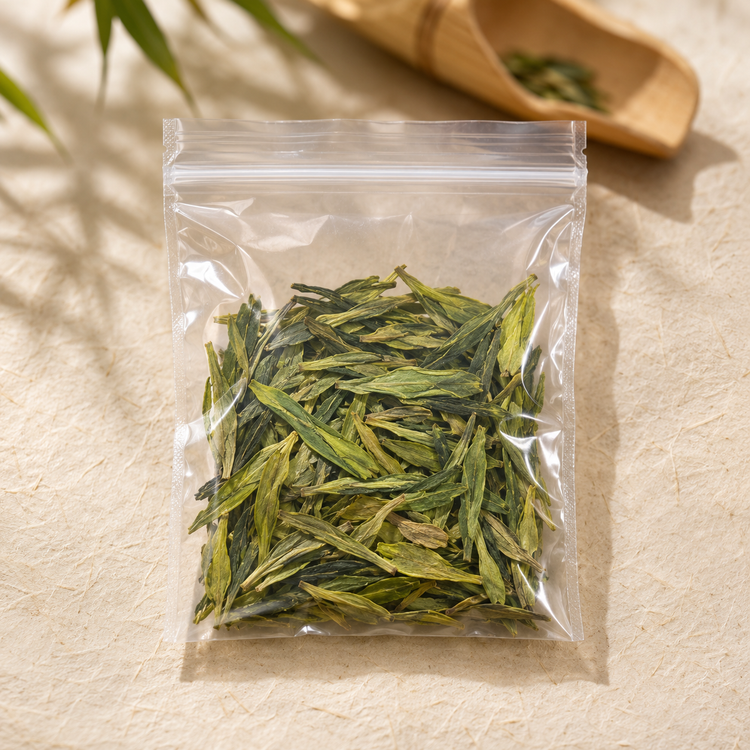
Bulk Bags for Tea Samples: When to Buy 100 vs. 1,000
Posted by AppleZipBags Team on Nov 5th 2026
Buy 100 bags when you’re testing a new tea, bag size, or sampler format. Buy 1,000 when the exact bag has passed a packing trial and you can use the stock across confirmed orders or repeat runs. Compare what you’ll spend on bags you can actually use, especially if your sampler needs more than one size or color.
Start by comparing the small resealable bags from Apple Zip Bags. If loose tea will touch the film, confirm that the exact bag variant is suitable for that use and your planned storage conditions before ordering.
When Does a 100-Pack Make More Sense?
A 100-count pack is useful for a first tasting, a limited seasonal blend, or a trial comparing two bag sizes. It gives you enough room to check the entire packing process: filling the bag, closing it without trapping leaves in the zipper, applying a label, and fitting the packet into the finished kit.
Use a small trial to catch differences between blends. A dense rolled oolong may fit neatly in the same bag that a fluffy chamomile blend overfills at the same portion weight. If your bulkiest blend crowds the zipper or makes the packet hard to pour, compare the larger resealable bag options before choosing one size for the whole program.
A trial also helps you decide whether a zipper is enough. If customers need visible evidence of first opening, evaluate a pouch designed with a heat-sealable header above the zipper. Confirm the pouch and equipment are compatible before building that step into your packing process. www.rightpak.co.uk
When Is a 1,000-Pack the Better Buy?
A 1,000-count pack makes sense when you’ve standardized the bag and expect to use it across several runs. Think monthly subscription boxes, recurring wholesale tasting kits, or samples included with online orders.
Before buying bulk, confirm three things:
- The same variant works across runs. Check the size, film, color, closure, and label layout.
- Demand is high enough for that variant. Count the bags needed per size or color, especially if different blends use different packaging.
- The bag works for the full distribution period. A clean closure on packing day tells you little about aroma and quality after shipping and storage.
Tea producer Teatulia’s storage guide recommends keeping tea away from light, heat, moisture, and strong odors. Accu-Seal’s packaging FAQ also explains that oxygen and moisture can pass through common polyethylene and polypropylene films over time. Buying more empty bags does not require filling them all at once; schedule filling around demand and the storage period you’ve evaluated. www.teatulia.com
Calculate Bags by Size, Not Just by Kit
Use this formula for each bag variant:
Bags to order = kits × packets of that variant per kit + expected extras
Suppose you’re making 200 four-tea sampler kits. Three blends fit a compact bag, and one needs a larger size. With an illustrative 5% allowance for setup, rejects, and extras, the order looks like this:
| Bag variant | Base requirement | Example allowance | Total needed |
|---|---|---|---|
| Compact: 3 per kit | 600 | 30 | 630 |
| Large: 1 per kit | 200 | 10 | 210 |
| Total | 800 | 40 | 840 |
One pack of 1,000 compact bags covers the total count, but it leaves you short on the larger bags. If the next tasting is confirmed and uses the same compact bag, bulk may make sense for that size. For the larger format, compare smaller packs with the bulk option using actual costs and expected usage. Replace the example allowance with what you observe during your trial.
Compare Cost per Usable Bag
The cheapest pack on a per-bag basis may leave you with surplus you can’t use. Compare the cost of each order over the next few runs:
Cost per usable bag = total landed cost ÷ number of bags you expect to use
Include shipping and applicable taxes in the landed cost. If you expect to use only 250 bags before changing the format, divide the bulk order cost by 250. If the remaining bags can serve another confirmed program, include that demand in the comparison. Check total spend too: a 1,000-pack may still be the cheaper purchase even if you won’t use every bag.
For recurring orders, submit an Apple Zip Bags wholesale inquiry with your quantities by size and color, plus your expected reorder schedule.
Confirm the Bag and Label Before Ordering in Bulk
Request food-contact documentation for the exact bag, including the selected tint or print where relevant. The FDA’s guidance on determining the regulatory status of food-contact materials explains how material components and conditions of use affect suitability. Its overview of food-contact regulation provides additional context for supplier discussions. www.fda.gov
Apply the final label to a filled packet before committing. Make sure the blend name and brewing directions are readable, and leave room for any information your distribution format requires. The FDA Food Labeling Guide is a starting point; verify the current requirements for your product and how it will be distributed. www.fda.gov
Frequently Asked Questions
How many bags do I need for 100 tea sampler kits?
If each kit contains three individually packed teas, start with 300 bags, then add your packing allowance. If each tea uses a different bag color, calculate the requirement separately for each color.
Should I use one bag size for every blend?
Use one size if the bulkiest blend closes cleanly and the smallest portion still looks appropriate in the finished kit. A shared size simplifies reordering, but a second size may be worthwhile if it prevents crushed leaves or difficult filling.
What should I confirm before switching from 100 to 1,000?
Confirm that the bulk listing matches the size, color, material, and closure you tested. Then check that you have enough planned demand for that exact variant. If you’re unsure which listing matches, contact Apple Zip Bags with the trial product details, portion size, and expected order volume.