
Bulk Bags for Spices: When to Buy 100 vs. 1,000
Posted by Apple Zip Bags on Nov 6th 2026
Buy 100 bags when you’re testing a new spice blend, portion size, or label. Buy 1,000 when the exact bag has passed a packing trial and you expect to use it across repeat runs. If you already know the bag works, compare the delivered cost of several small packs with one bulk pack. You may reach the break-even point well before you need all 1,000 bags.
The key is to count demand by bag size, color, and material. Five hundred packets of fine seasoning and 500 packets of whole star anise don’t add up to a 1,000-bag order unless both products work in the same format. Start by comparing the small resealable bag options from Apple Zip Bags.
When to Buy 100 Spice Bags
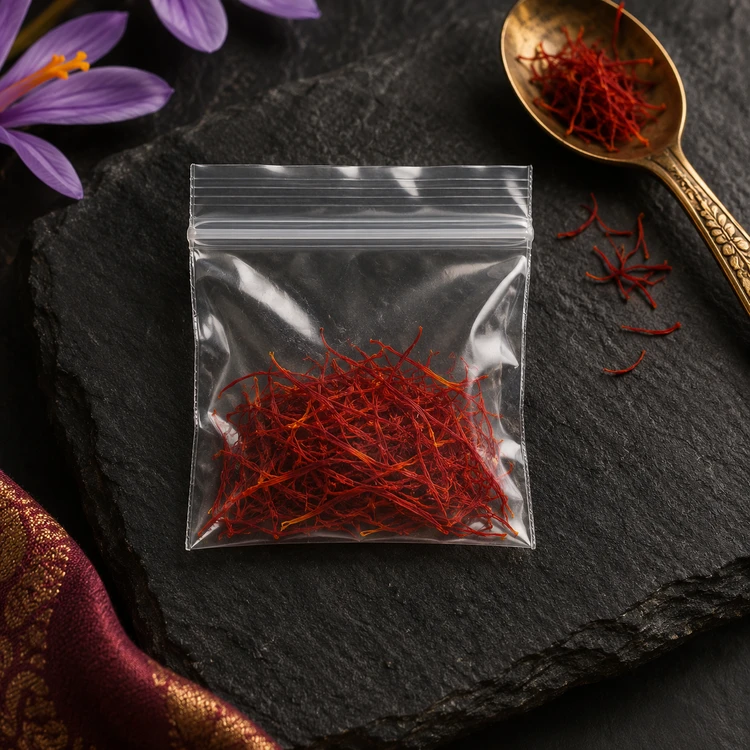
A 100-count pack of small resealable bags is useful for a first farmers market, a seasonal sampler, or a trial of a new filling method. A short run shows where your process slows down: ground turmeric may collect in a narrow zipper, while whole cloves may press against the seams.
Use the trial to check whether staff can fill, close, and label each bag without rework. Then handle the finished packets as you would during shipping or kit assembly. If a coarse blend bulges or leaves too little room below the zipper, compare the larger resealable bag formats before buying more.
A small trial also gives you a realistic packing allowance. If four of the first 100 packets need replacement because powder fouls the zipper or the label wrinkles, investigate the cause and use what you learn to plan the next run.
When to Buy 1,000 Spice Bags
A 1,000-count pack is a better fit when you’ve confirmed the specification and can use the same variant for recurring sampler boxes, recipe kits, or online order inserts.
Bulk buying is most useful when you know:
- Which bag works: The tested size, film, color, and closure match the bulk listing.
- How fast you’ll use it: Your estimate comes from scheduled runs or recent usage.
- How long the spices will stay packed: You’ve evaluated the package over the intended storage period.
- Whether the format will change: A planned portion or label redesign may make surplus bags harder to use.
Buying 1,000 empty bags doesn’t mean filling them all at once. Schedule filling around demand and the storage period you’ve tested. McCormick’s spice storage guidance recommends a cool, dry cupboard away from the sink or range. Accu-Seal’s packaging FAQ explains that oxygen and moisture can pass through common polyethylene and polypropylene films over time. A zipper alone doesn’t establish how long a packed spice will retain its quality. www.mccormick.com
Calculate How Many Bags You Need by Variant
Bags needed = planned kits × packets of that variant per kit + packing extras
Suppose you’re preparing 180 three-spice sampler kits. Two ground spices use the same compact bag, and one coarse blend needs a larger bag. With an illustrative 5% allowance:
| Bag variant | Base requirement | Packing extras | Total needed |
|---|---|---|---|
| Compact bags: 2 per kit | 360 | 18 | 378 |
| Larger bags: 1 per kit | 180 | 9 | 189 |
| Total | 540 | 27 | 567 |
If you buy only in 100-count packs, that’s four compact packs and two larger packs. If you have another confirmed run using the compact size, compare a 1,000-count compact pack with the combined cost of smaller packs across both runs. Calculate the larger size separately.
Compare Delivered Cost and Find the Break-Even Point
Divide the delivered bulk price by the delivered price of a 100-pack, using comparable quotes for the same specification. Then round up to find the first whole number of small packs at which bulk is no more expensive. If shipping changes with quantity, compare actual cart totals instead of multiplying a single-pack quote.
For example, if four 100-packs cost $36 delivered and one 1,000-pack costs $32 delivered, bulk costs less for a confirmed 350-bag run. The remaining 650 bags may help with future orders, but you don’t need to count those future orders to justify the purchase. If you only need 100 bags and have no confirmed use for the rest, compare the total spend for that smaller run. These figures are illustrative.
For recurring orders, send your forecast by size and color through the Apple Zip Bags wholesale inquiry form. Include when you need the first shipment and how often you expect to reorder.
Confirm the Bag Before You Commit
For direct contact with loose spices, ask the supplier for documentation covering the exact bag variant and intended conditions of use. The FDA’s guidance on food-contact material components explains why material components and permitted conditions matter. Its overview of food-contact regulation provides further context for that supplier discussion. www.fda.gov
If customers need visible evidence of first opening, evaluate a pouch designed with a heat-sealable header above the zipper before ordering. Check compatibility with your sealer. Apply the final label to a filled packet as well, and use the FDA Food Labeling Guide as a starting point for checking the current requirements that apply to your product and distribution format. www.rightpak.co.uk
Frequently Asked Questions
How many bags do I need for 100 spice sampler kits?
If each kit contains four individually packed spices, start with 400 bags and add your packing allowance. If each blend has its own bag color, calculate demand for each color before rounding up to a pack size.
Can I use one bag size for every spice?
Yes, if your finest powder fills without fouling the zipper and your bulkiest blend fits without stressing the film or seams. Test both extremes before standardizing.
What should I check before switching from 100 to 1,000?
Confirm that the bulk option matches the size, material, color, and closure you tested. Then compare delivered costs and planned usage for that exact variant. If you’re unsure which listing matches, contact Apple Zip Bags with your spice type, portion size, storage plans, and expected order volume.