
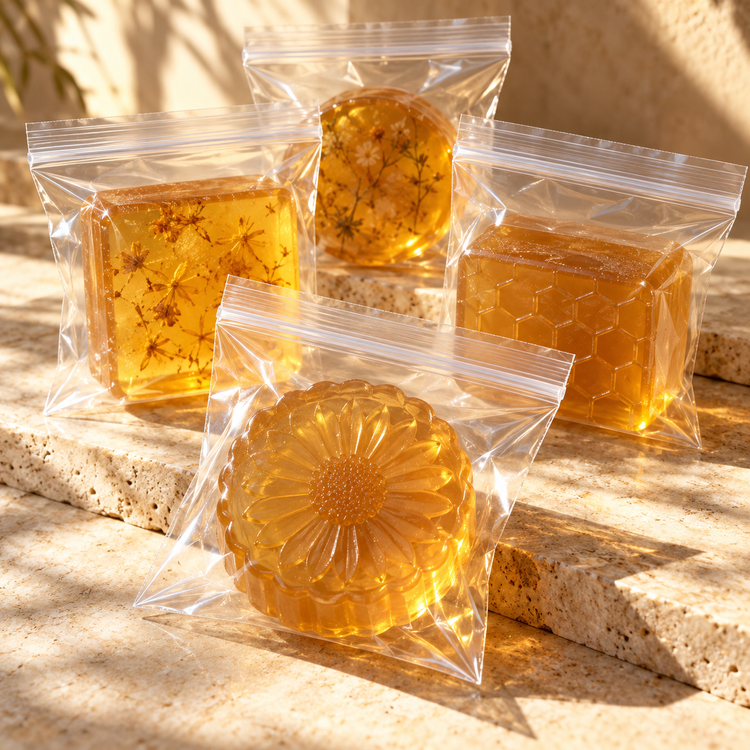
Bulk Bags for Soap Samples: When to Buy 100 vs. 1,000
Posted by AppleZipBags Team on Oct 24th 2026
Soap samples can support customer discovery, market giveaways, and introductions to a new collection. Once sampling becomes a regular activity, packaging quantities deserve the same planning as the products themselves.
Should you buy 100 bags or commit to 1,000?
Choose 100 bags when you are testing a size, introducing a new sample format, or preparing a limited event. Consider 1,000 bags when the packaging has passed your trials and recurring demand supports the larger supply.
The decision should follow proven fit, formulation compatibility, and expected usage. A low unit price is useful only when the bags suit the samples you intend to distribute.
Buying 100 vs. 1,000 Soap Sample Bags
| Consideration | 100 Bags | 1,000 Bags |
|---|---|---|
| Testing a new sample format | Practical starting quantity | Better after testing |
| Limited event | Often sufficient | Depends on confirmed demand |
| Regular customer-order inserts | May require frequent replenishment | Useful when usage is established |
| Changing labels or sample sizes | Easier to adjust | Greater risk of unsuitable surplus |
| Multiple formulations | Allows smaller trials | Best after assessing each application |
| Discovery-set production | Useful for a limited run | Can support repeat production |
| Upfront spending | Compare the actual delivered total | Larger quantity does not always mean proportionally higher cost |
| Storage | Smaller supply to accommodate | Needs a clean, designated location |
Start by defining the package, then browse the Apple Zip Bags collection for formats to evaluate.
Confirm the Packaging Role Before Counting Bags
A resealable bag may directly hold a suitable sample, or it may serve as outer packaging around individually wrapped soaps.
These arrangements have different requirements.
Individual Sample Packaging
One bag may group a prepared sample with its identification and product information.
Direct-contact suitability still depends on the formulation and specific packaging material.
Outer Packaging for Sampler Sets
An outer bag can keep several individually wrapped samples together.
The primary wrapping addresses each soap’s needs. The outer bag organizes the assortment and its information card.
Event Distribution Packs
A larger packet might contain wrapped samples, a collection card, and other appropriately packaged items.
Measure and test the complete arrangement before choosing a quantity.
When Buying 100 Bags Makes Sense
You Are Testing Fit
A small sample can become surprisingly bulky once its wrapping, label, and card are included.
Test whether:
-
The wrapped soap passes through the opening comfortably.
-
Decorative details remain intact.
-
The closure stays clear of the product.
-
Labels remain readable.
-
The sample can be removed easily.
A smaller purchase gives you room to adjust before committing to one format.
Compatibility Testing Is Incomplete
Fragrance, colorants, oils, and surface texture can affect how soap interacts with packaging.
Use the actual formulation, bag, wrapping, and label during your trial.
Inspect over a period relevant to your distribution schedule. A short fit test does not establish longer-term performance.
Soap Queen’s guidance on storing handmade bath products discusses how storage conditions can affect product quality.
You Have a Defined Event
A limited market giveaway or small customer campaign may require fewer bags than a bulk pack provides.
For example, an event with a planned distribution of 75 individually bagged samples may be comfortably covered by a 100-pack.
Base the allowance on realistic demand and packing needs rather than automatically choosing the largest quantity.
Your Labels Are Still Changing
A revised product card can change the required bag dimensions.
Finalize the sample, primary wrapping, label, and insert before ordering a large supply.
Compare the 100-pack small-size bag options when evaluating a smaller purchasing format. Confirm the selected dimensions and pack count.
When Buying 1,000 Bags Makes Sense
Sampling Is a Regular Activity
A larger supply may suit businesses that include samples in customer orders or distribute them consistently through events and retail relationships.
Use recent activity and confirmed plans to estimate demand.
The Format Is Proven
A bulk purchase becomes more practical when you have established:
-
Sample dimensions.
-
Primary wrapping.
-
Label layout.
-
Bag specifications.
-
Product compatibility.
-
Storage and distribution arrangements.
A repeatable package is easier to replenish than a format still being redesigned.
Several Products Use the Same Bag
One bag size may accommodate multiple sample products.
However, a shared fit does not establish shared formulation compatibility. Assess each intended application appropriately.
For established requirements, compare the selected specifications in the 1,000-pack small bag range.
A Group Can Share the Purchase
Several makers may be able to share a larger pack when they need the same format.
Agree on the exact product, allocation, and cost before ordering. Each maker should still assess suitability for their own soap.
Calculate Demand by Packaging Format
Count finished packages rather than soap pieces alone.
Individual Sample Example
If you distribute 150 samples each month and every sample uses one bag:
150 samples × 1 bag = 150 bags per month
A 1,000-pack would provide approximately 6.7 months of supply at that steady rate.
Discovery-Set Example
Suppose you prepare 80 sets, each containing four individually packaged samples and one outer bag.
| Packaging Component | Calculation | Quantity Needed |
|---|---|---|
| Individual sample packages | 80 × 4 | 320 |
| Outer assortment bags | 80 × 1 | 80 |
The individual packaging and outer bag may use different materials or sizes. Calculate each separately.
For larger assortments, compare dimensions in the large resealable bag collection.
Estimate How Long Each Pack Will Last
Use:
Months of supply = bags purchased ÷ average monthly usage
| Monthly Usage for One Format | 100 Bags Last Approximately | 1,000 Bags Last Approximately |
|---|---|---|
| 25 | 4 months | 40 months |
| 50 | 2 months | 20 months |
| 100 | 1 month | 10 months |
| 250 | 0.4 months | 4 months |
| 500 | 0.2 months | 2 months |
These examples assume steady usage.
Calculate seasonal events separately if they create a temporary increase in demand. Avoid treating one unusually busy month as your permanent rate.
Compare Delivered Cost per Bag
Use the complete purchase cost:
Delivered cost per bag = total purchase cost ÷ number of bags received
Include applicable shipping, taxes, and discounts.
Hypothetical Cost Example
The following figures illustrate the calculation and are not Apple Zip Bags prices.
| Option | Delivered Cost | Quantity | Cost per Bag |
|---|---|---|---|
| Smaller pack | $11 | 100 | $0.11 |
| Larger pack | $42 | 1,000 | $0.042 |
The larger pack has the lower unit cost in this example. Someone needing only 70 bags would still spend less immediately on the smaller purchase.
Compare the larger pack with the combined cost of the smaller packs you realistically expect to use.
Compare Equivalent Products
Check dimensions, material, thickness, closure, and printing.
A lower price does not provide practical value if the bag crowds the sample or obscures the label.
Confirm Soap Readiness Before Packaging
Purchasing quantities should follow a suitable production process.
Cold-Process Samples
Complete the appropriate curing process before final packaging.
Bramble Berry’s explanation of soap curing describes the water loss and changes involved.
A sealed bag should not be used as a substitute for curing.
Melt-and-Pour Samples
Allow the soap to cool and harden appropriately, then follow the base supplier’s wrapping recommendations.
Soap Queen’s guide to explaining and preventing glycerin dew discusses how glycerin can attract moisture from the surrounding air.
General-purpose zipper bags should not automatically replace recommended primary wrapping.
Test Primary Wrapping and Outer Bags Together
An individually wrapped sample and an outer bag form one complete arrangement.
Wholesale Supplies Plus provides melt-and-pour packaging FAQs covering common questions about this process.
Bramble Berry’s explanation of shrink wrapping also distinguishes approaches for different soap types.
Use guidance relevant to the specific formulation and material.
During testing, look for sticking, surface moisture, color transfer, film changes, and label lifting.
Assess Mixed-Fragrance Sets
A zipper closure does not necessarily prevent fragrance migration.
If several scents share an outer bag, test the complete assortment over its intended storage period.
Keep each sample individually identified so recipients can recognize it after opening.
For presentation ideas, browse Soap Queen’s soap packaging resources.
Keep Stock Organized by Specification
Store unused bags cleanly and separate them by size and style.
Label supplies so similar formats do not become mixed. Keep a manageable working quantity near the packing area and monitor remaining stock.
Where individual packets and outer bags have different usage rates, track them separately.
Set a Reorder Point
Regular users can choose a stock level that triggers replenishment.
Use:
Reorder point = expected use during replenishment time + a practical reserve
For example, if you use 75 bags weekly and plan around two weeks for replenishment, expected usage is 150 bags. A reserve of 50 gives a reorder point of 200.
Adjust the figures to actual workload and ordering conditions.
Common Bulk-Purchasing Mistakes
Buying Before Testing Compatibility
Assess the actual soap and package together.
Measuring Bare Soap
Include wrapping, decoration, labels, and inserts.
Counting Sets Instead of Packages
One discovery set may use several packaging components.
Ordering Equal Quantities of Every Size
Inner and outer formats often have different demand.
Choosing Unit Price Alone
Consider total spending, fit, storage, and expected use.
Assuming a Zip Closure Provides Barrier Performance
Check relevant specifications and test the formulation.
Forgetting Planned Changes
A new sample mold or information card may alter the bag requirement.
Frequently Asked Questions
Should I buy 100 or 1,000 bags for soap samples?
Choose 100 while testing or preparing a limited run. Consider 1,000 after confirming fit, compatibility, and recurring demand.
Are larger packs always better value?
They may offer a lower unit cost, but compare delivered totals for equivalent products. Unsuitable or unused stock reduces the benefit.
How many bags do sampler sets need?
Count individual packages and outer bags separately, then calculate demand for each format.
Can different soaps use the same size bag?
Possibly, if the complete packages fit comfortably. Assess formulation compatibility separately.
Can melt-and-pour samples go directly into zipper bags?
Follow the base supplier’s recommendations. General-purpose bags should not automatically replace suitable primary wrapping.
Will individually bagged samples keep fragrances separate?
Do not assume so. Test mixed assortments under representative conditions.
When should I reorder?
Reorder when remaining stock reaches expected usage during replenishment plus an appropriate reserve.
Buy Around a Proven Sample Package
A smaller pack gives you flexibility while testing. A larger supply supports consistent formats and predictable use.
Prepare a complete sample, assess its performance, and calculate requirements by packaging type. For material, sizing, and quantity questions, contact Apple Zip Bags with your intended application and dimensions.