
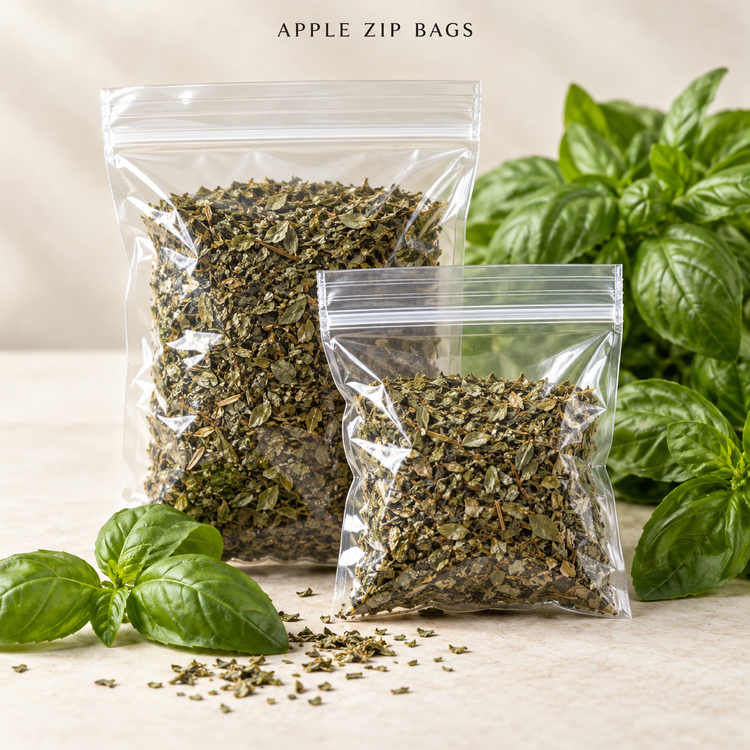
Best Small Resealable Bags for Herbs
Posted by AppleZipBags Team on Oct 26th 2026
Small resealable bags can help organize culinary herbs, portion ingredients for recipes, and keep labeled supplies together. But choosing the right packaging starts with a distinction: fresh and dried herbs have different storage needs.
The best small resealable bags for herbs are appropriately sized, suitable for the intended food contact, and compatible with the herb’s moisture and storage requirements. For dried herbs, moisture protection matters. For fresh herbs, temperature, excess moisture, and the appropriate amount of ventilation need attention.
A zipper closure is convenient, but it does not establish food-contact suitability, barrier performance, or shelf life by itself.
This guide explains what to check before choosing bags for basil, oregano, rosemary, thyme, mint, parsley, and other culinary herbs.
Which Bags Work Best for Different Herb Uses?
| Intended Use | Useful Packaging Features | Main Consideration |
|---|---|---|
| Dried whole leaves | Comfortable capacity and suitable moisture protection | Avoid crushing delicate leaves |
| Crumbled dried herbs | Secure closure and readable labels | Keep particles clear of the zipper |
| Recipe portions | Compact size and clear identification | Match the package to the actual portion |
| Fresh refrigerated herbs | Suitable food-contact material and appropriate ventilation | Follow herb-specific storage guidance |
| Fresh basil | Packaging compatible with its storage method | Do not assume standard refrigerator treatment |
| Herb sampler sets | Individually identified portions inside an outer package | Assess each inner package separately |
| Pantry organization | Consistent labels and appropriate storage | Protect dried herbs from moisture, heat, and light |
Browse the Apple Zip Bags collection after defining the intended use. Confirm the specifications of the selected product rather than assuming every style suits direct food contact.
Start with Fresh or Dried Herbs
Dried Herbs Need Protection from Moisture
Dried herbs should be fully dry before storage.
The National Center for Home Food Preservation recommends storing dried herbs in airtight containers in a cool, dry, dark location to protect their color and fragrance. Its herb-drying guidance provides a useful starting point.
Choose packaging with properties appropriate to that purpose. A resealable zipper does not independently establish that the complete bag provides the necessary moisture protection.
Fresh Herbs Need a Different Approach
Fresh leaves still contain substantial moisture. Their storage arrangement should account for the particular herb and intended duration.
University of Maine Extension discusses using an open, perforated bag for certain washed fresh herbs and a different approach for basil in its guide to using fresh herbs in cooking.
Do not treat tightly sealed bags of fresh leaves as shelf-stable pantry products.
Confirm Food-Contact Suitability
For culinary herbs, ask whether the specific bag is suitable for the intended contact and conditions.
Useful questions include:
-
What material is used?
-
Is the selected product intended for food contact?
-
Does that suitability cover the proposed temperature and duration?
-
Are there restrictions involving printed surfaces?
-
Is the bag intended for refrigerated or freezer use, if relevant?
-
Are moisture-barrier specifications available?
A bag marketed for organizing jewelry or craft supplies should not automatically be assumed suitable for herbs.
Likewise, food-contact suitability does not establish that a bag will preserve aroma or provide the moisture barrier needed for long-term dried-herb storage.
Clear Bags for Easy Identification
Clear packaging lets you recognize the general appearance of the contents and read labels without opening each packet.
It can be useful for:
-
Separating oregano and thyme.
-
Identifying rosemary leaves.
-
Checking remaining recipe portions.
-
Organizing dried mint.
-
Keeping herb samples with their references.
Written identification remains important. Similar-looking dried leaves should not rely on appearance alone.
Keep the herb name and packing or drying date visible.
Choose Size Around Volume, Not Weight Alone
Equal weights of different herbs can occupy very different amounts of space.
Whole rosemary leaves, fluffy dried mint, and finely crumbled oregano do not pack identically.
Test the Intended Portion
Fill a sample with the amount you plan to package.
Check whether you can:
-
Load the herbs without excessive crushing.
-
Keep the zipper clear.
-
Close the bag comfortably.
-
Remove a small amount.
-
Return the packet to its storage location.
For whole dried leaves, avoid compressing the contents merely to use a smaller bag.
Illinois Extension’s guidance on preserving herbs recommends avoiding unnecessary crushing during packaging to help preserve flavor.
Leave Room Below the Closure
Loose leaves and fine particles can interfere with the zipper.
Leave enough headroom to handle the opening and inspect the seal.
For a smaller quantity to evaluate, compare the 100-pack small-size bag options. Verify food-contact suitability and usable dimensions for the selected variant.
Whole Leaves or Crumbled Herbs?
Packaging should support the form you intend to store.
Whole Dried Leaves
Whole leaves need enough space to avoid unnecessary breakage.
They may require a larger bag than their weight suggests.
Crumbled Herbs
Crumbled herbs can be easier to portion, but fine pieces may collect near the closure.
Use a clean filling method and inspect the zipper before storage.
Penn State Extension’s guide to preserving herbs by drying discusses storing herbs whole or crushed and protecting them from moisture.
Choose a manageable format rather than assuming the smallest packet provides the best storage.
Clear or Colored Bags for Herbs?
Clear Bags for Visibility
Clear bags make labels and contents easy to inspect.
For dried herbs, keep the packets within suitable dark storage rather than leaving them exposed on a sunny counter.
Colored Bags for Categories
Colored outer bags can distinguish recipe collections or sampler sets.
Use readable labels alongside color.
Printed Bags for Presentation
Printed packaging may suit an assortment, provided it does not obscure identification.
The small bag range with design selections offers formats to compare, but confirm the selected product’s food-contact suitability before placing herbs directly inside.
Color alone does not establish light protection or barrier performance.
Thickness Is One Part of the Decision
Film thickness can affect handling, but it does not fully describe the package.
Also consider:
-
Material.
-
Seams.
-
Closure.
-
Moisture transmission.
-
Intended storage conditions.
-
Fill volume.
-
Frequency of opening.
Apple Zip Bags lists 2.5 mil options among its products. One mil equals one-thousandth of an inch.
Thickness alone does not establish airtightness, aroma retention, freezer suitability, or the shelf life of the contents.
When a Jar or Other Container Makes More Sense
Resealable bags are convenient for portions and compact organization. A suitable rigid container may be more practical for frequently accessed pantry herbs or fragile whole leaves.
The National Center for Home Food Preservation’s guide to packaging and storing dried foods discusses suitable storage containers and checking dried foods during storage.
A combined system can use appropriately packaged portions inside a larger organized storage area.
Choose around the required protection rather than forcing every herb into the same format.
Fresh Herbs Require Herb-Specific Storage
A bag that works for dried oregano is not automatically appropriate for fresh basil or cilantro.
Fresh-herb storage may involve loose covering, ventilation, refrigeration, or a different arrangement depending on the herb.
Health Canada’s guide to storing fresh herbs distinguishes basil from herbs commonly stored in the refrigerator.
Follow an established method for the particular herb. Avoid crushing fresh leaves or leaving them warm in tightly packed packets.
Labels That Make Herb Storage Useful
A practical label can include:
-
Herb name.
-
Fresh or dried status.
-
Whole or crumbled form.
-
Drying or packing date.
-
Batch reference, where relevant.
-
Intended recipe or blend.
For blends, keep a separate record of the ingredients and proportions.
If herbs are being sold, determine the labeling requirements appropriate to the product and market before finalizing the package.
Grouping Recipe Portions and Samplers
An outer bag can keep several individually packaged herbs together with a recipe card.
For example, a cooking assortment might include separate identified portions of rosemary, thyme, and oregano.
Keep the individual packages suitable for direct contact and storage. The outer bag organizes the set; it does not replace the protection required by each portion.
Measure the combined packets and card before comparing the large resealable bag collection.
Should You Buy 100 or 1,000 Bags?
Start Smaller When Testing
A smaller purchase suits:
-
Unconfirmed dimensions.
-
New portion sizes.
-
Several herb forms.
-
A limited sampler project.
-
Food-contact or performance questions still being resolved.
Consider Larger Quantities After Testing
A larger supply can suit recurring portions or an established packing process.
Count requirements separately by size. Inner portions and outer sampler bags may have very different usage rates.
Compare delivered cost with the quantity you expect to use before changing the format.
Test the Complete Storage Routine
Before ordering in volume:
-
Confirm suitability for the intended food contact.
-
Prepare the herbs using an appropriate method.
-
Fill a representative portion.
-
Keep particles clear of the closure.
-
Apply readable identification.
-
Store under the intended conditions.
-
Inspect the package and contents regularly.
-
Evaluate opening and dispensing.
Do not assign a shelf life based solely on the bag’s appearance or thickness.
Common Mistakes to Avoid
Treating Fresh and Dried Herbs Identically
Their moisture and storage needs differ.
Packaging Dried Herbs Before They Are Fully Dry
Complete the appropriate drying process first.
Assuming Every Bag Is Suitable for Food
Verify the specific product and intended conditions.
Overfilling
Leave space for closure and dispensing.
Choosing by Thickness Alone
Check material and barrier properties where relevant.
Leaving Clear Packets in Direct Light
Use suitable storage for dried herbs.
Relying on Appearance Instead of Labels
Keep every portion clearly identified.
Frequently Asked Questions
What small bags work best for herbs?
Choose appropriately sized bags suitable for the intended food contact and storage conditions. Dried herbs require suitable moisture protection; fresh herbs need herb-specific handling.
Can fresh herbs go into resealable bags?
Bags can be part of some storage methods, but ventilation, moisture, and temperature requirements vary. Follow guidance for the particular herb.
Are clear bags suitable for dried herbs?
They can be useful when their material and construction meet the storage needs. Keep dried herbs in suitable cool, dry, dark storage.
Can I use craft bags for culinary herbs?
Do not assume suitability. Confirm the selected product’s intended food-contact application.
What size should I buy?
Test the actual portion by volume. Whole leaves may need more room than their weight suggests.
Do thicker bags retain aroma better?
Thickness alone does not establish aroma-barrier performance. Material and construction also matter.
When should I buy in bulk?
After confirming food-contact suitability, fit, performance, and realistic demand.
Choose Packaging Around the Herb and Its Use
Start with fresh or dried status, confirm suitable food contact, and test the actual portion.
A useful package keeps herbs identifiable and accessible while meeting their storage needs. For product-specific material and sizing questions, contact Apple Zip Bags with your intended application and portion dimensions.