
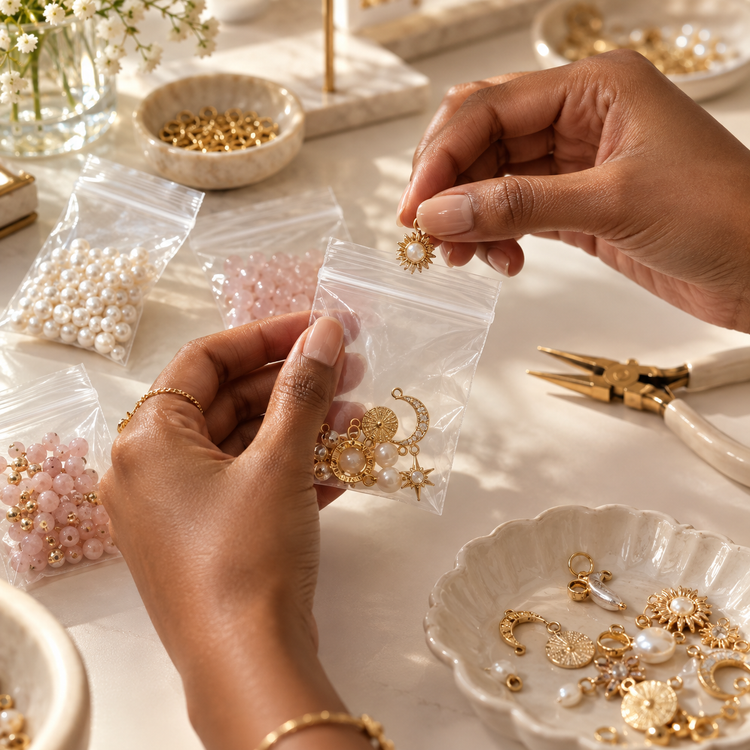
Best Small Resealable Bags for Embroidery Supplies
Posted by AWS Team on Oct 15th 2026
Every projects often involve more small components than expected. Floss skeins, bobbins, beads, thread cards, and spare embellishments can quickly become separated from their labels or mixed with supplies for another design.
The best small resealable bags for embroidery supplies are clear, comfortably sized bags that keep materials with their identifying information and allow easy access. They work particularly well for organizing floss bobbins, grouping project threads, and separating embellishments.
Needles and other sharp tools require suitable protective holders. Finished embroidery, valuable textiles, and long-term collections may also need different storage arrangements from everyday project supplies.
This guide explains which bag features matter, how to choose a useful size, and how to organize embroidery materials without crowding your workspace.
Which Bags Work Best for Different Embroidery Supplies?
Start by identifying what each packet will contain.
| Embroidery Supply | Useful Packaging Features | Important Fit Check |
|---|---|---|
| Floss skeins | Clear visibility and room for the original band | Avoid tightly compressing the skein |
| Thread bobbins | Comfortable opening and readable identification | Measure the wound bobbin |
| Thread cards | Flat fit and sufficient width | Keep card edges from catching |
| Embellishment beads | Compact format and secure closure | Keep tiny beads clear of the zipper |
| Buttons and charms | Visibility and space for the complete set | Check for protruding or sharp edges |
| Project threads | Room for multiple labeled packets | Test the combined bulk |
| Spare components | Clear label and project reference | Keep related pieces together |
| Needles | Appropriate protective case inside the project bag | Flexible film alone is insufficient |
Explore the Apple Zip Bags collection after measuring the materials you use most frequently. Choose around the complete contents rather than the smallest bag that appears to fit.
Why Small Resealable Bags Are Useful for Embroidery
They Keep Thread Identification with the Material
A loose skein becomes harder to identify once its paper band is lost.
Small bags provide a place to keep the thread and its reference together. For bobbins, make sure the color number remains readable without unpacking the entire packet.
Useful identifying details include:
-
Manufacturer.
-
Thread range.
-
Color number.
-
Fiber type.
-
Project name.
-
Quantity remaining, if tracked.
The DMC website provides thread and project references that can help you identify materials accurately.
They Separate Active Projects
Many stitchers work on several designs at once. A project packet keeps the selected threads together instead of allowing them to return to general storage accidentally.
Label the outer packet with the design name and keep individual thread references inside.
This is particularly helpful when different projects use neighboring shades or different thread types.
They Make Small Embellishments Easier to Find
Beads, sequins, buttons, and charms can disappear inside a larger project pouch.
Separate packets keep each component visible and connect it to the correct project. Include the item number or supplier reference where available.
For bead terminology and component information, the Fire Mountain Gems Jewelry Maker’s Library offers useful reference material.
Best Bags for Embroidery Floss Skeins
Floss skeins need enough room to retain a manageable shape.
Choose a bag that accommodates the skein and its identification band without forcing either into the closure. A tight packet can make repeated removal inconvenient.
Keep the Original Band
If the skein remains in its original format, keep the identifying band with it.
If the band comes loose, place it where it stays readable and cannot fall out unnoticed during use. You can also add a separate label to the bag.
Avoid Mixing Unidentified Threads
Grouping several skeins in one bag works best when each remains individually identifiable.
If the threads have lost their references, separate them and label what you know. Do not assume two similar-looking shades are interchangeable.
Compare Colors Outside the Bag
Clear film helps you find the general shade, but reflections can affect appearance.
For close color comparisons, remove the thread and view the actual materials under consistent lighting. Confirm the manufacturer and color reference before substituting a thread in a project.
Best Bags for Embroidery Bobbins
Measure the bobbin after winding it.
A bare bobbin may fit easily while a fully wound one becomes too bulky. Include enough clearance for loading and removal without scraping the thread against the opening.
Organize by Your Retrieval Method
Choose a system that reflects how you look for supplies.
Common arrangements include:
-
Manufacturer and color number.
-
Thread family.
-
Project.
-
Fiber type.
-
Color group.
Number-based storage is useful when following a chart. Color-based grouping can be convenient for free embroidery, provided the identifying references remain attached.
Label Consistently
A simple label format keeps the collection understandable:
Brand — Range — Color Number — Project, if applicable
For active work, place the most frequently needed information where you can read it without opening the packet.
Apple Zip Bags lists 100-pack small-size options that can provide a smaller purchasing format for testing. Confirm the selected dimensions and pack count.
Best Bags for Beads and Embroidery Embellishments
Small clear packets are useful for separating embellishments by size, finish, and project.
For beaded embroidery, a packet label might identify:
-
Bead type.
-
Size.
-
Color or finish.
-
Product reference.
-
Design name.
-
Approximate quantity, if useful.
Leave Room Above the Contents
Do not fill the bag to the zipper. Keep the sealing area free of beads and other small components.
Inspect the closure before returning the packet to a larger project bag.
Protect Delicate Finishes
Some decorative components may require individual protection or a different container to avoid rubbing or pressure.
Evaluate the actual materials. A general-purpose bag can organize supplies, but it should not be assumed to prevent every type of surface damage.
Watch for Sharp Edges
Charms, wire components, or damaged embellishments may have points that puncture flexible film.
Use appropriate protective housing where necessary.
Keep Needles in a Protective Holder
A resealable bag can group a closed needle case with project supplies, but it should not serve as the only protection around loose needles.
Use a purpose-designed case or another suitable point-protective holder. Check that it remains closed during transport.
Count and return needles at the end of a session, especially in shared spaces.
For stitching techniques and educational material, the Royal School of Needlework’s Stitch Bank provides a useful reference while planning projects and their required supplies.
Choosing the Right Bag Size
The most useful size is the one that holds the complete contents comfortably.
Measure:
-
The wound bobbin, skein, or thread card.
-
Any identifying band or label.
-
Additional component packets.
-
Any instructions included in the same bag.
Check usable internal dimensions rather than relying only on the overall appearance.
Account for Bulk
Several bobbins placed together occupy more space than a flat measurement suggests.
As contents expand a flat bag, they reduce the space available across its width and height. Test the filled arrangement before purchasing a large supply.
Leave the Zipper Clear
The closure should operate without compressing threads or catching fibers.
If the packet bulges into the zipper area, choose a larger format or divide the contents.
Use Larger Outer Bags for Complete Projects
A project may need several small packets inside one larger bag.
For this arrangement, compare the dimensions in the large resealable bag collection. Include the complete set of inner packets when checking fit.
Clear or Colored Bags for Embroidery Supplies?
Clear Bags for Everyday Identification
Clear packaging helps you see thread shades, bobbin labels, and embellishments.
It is a practical choice when you retrieve materials by reference number or need to check a kit’s contents quickly.
Colored Bags for Project Grouping
Colored outer bags can separate active designs or workshop kits.
For example, one color might identify a floral sampler and another a holiday ornament project. Add a written project label so the system remains easy to understand.
A Combined System
Use clear inner packets for individual materials and a colored outer bag for the complete project.
This preserves visibility while making each project easier to recognize in a drawer or travel case.
Does Thickness Matter?
Film thickness affects how a bag feels, but performance also depends on material, seams, closure, size, and fill.
Apple Zip Bags lists 2.5 mil products among its small bag options. One mil is one-thousandth of an inch.
For embroidery supplies, evaluate whether the bag:
-
Handles the intended contents comfortably.
-
Opens and closes conveniently.
-
Resists strain during ordinary use.
-
Fits the storage arrangement.
-
Leaves threads easy to retrieve.
Thickness does not make flexible packaging needle-proof or establish archival suitability.
Everyday Project Storage vs. Long-Term Textile Storage
Organizing working threads is different from preserving finished embroidery or historic textiles.
For valuable pieces, select storage materials and arrangements appropriate to the textile. Avoid assuming that a general-purpose resealable bag is suitable for permanent, tightly sealed storage.
The Canadian Conservation Institute’s guidance on caring for textiles and costumes provides a specialist starting point for understanding textile preservation needs.
If a project packet includes valuable paper charts, the Library of Congress’s care guidance for works on paper explains the importance of suitable support and storage conditions.
For plastic enclosures used with collectible paper, the National Postal Museum’s safe-plastics guidance also helps explain why the specific material matters.
Should You Buy 100 or 1,000 Bags?
Choose a Smaller Pack When Testing
A smaller quantity makes sense when:
-
You have not confirmed the size.
-
Your bobbins or thread cards vary.
-
You are organizing a limited collection.
-
You use bags occasionally.
-
Your project-kit arrangement is still changing.
Consider 1,000 for Consistent Use
A larger quantity can suit embroidery-kit businesses, workshop organizers, clubs, or frequent users with a proven format.
Count bags separately by size. A kit using five inner packets and one outer bag does not require equal quantities of both.
Compare the selected specifications in the 1,000-pack small bag range after testing the fit.
A Simple Embroidery Supply Organization System
Step 1: Separate Materials by Type
Begin with floss, specialty threads, beads, buttons, and other embellishments.
Keep needles and sharp tools in suitable protective holders.
Step 2: Preserve Identification
Retain original bands and product references. Transfer essential details to a consistent label when needed.
Step 3: Choose a Few Useful Sizes
Select formats that accommodate your common bobbins, skeins, and embellishment portions.
Step 4: Build Project Packets
Group the selected materials for each active design while keeping individual references visible.
Step 5: Assign a Storage Location
Place packets in labeled drawers, boxes, or project cases.
Step 6: Review Before Reordering
Check existing supplies before purchasing replacement thread, embellishments, or packaging.
Frequently Asked Questions
What are the best small resealable bags for embroidery supplies?
Clear bags with comfortable usable dimensions, readable labels, and convenient closures are useful for floss, bobbins, and embellishments. Choose the size around the complete contents.
Can I keep embroidery floss in resealable bags?
Bags can help organize working floss and retain its identification. Avoid crowding the skeins, and choose appropriate storage arrangements for valuable or long-term textile collections.
Should every bobbin have its own bag?
That depends on your system. Individual packets can preserve identification, while grouped packets may suit project storage. Keep each thread reference readable.
Can needles go directly in the bag?
Use a suitable protective needle holder. Flexible film alone is not dependable protection against exposed points.
Are colored bags useful for embroidery?
Yes. They can distinguish projects or workshop kits. Clear inner packets help retain visibility of individual supplies.
What size should I buy?
Measure the wound bobbin, skein, or card, including its label and any additional contents. Test loading and removal before ordering in volume.
Are thicker bags archival-safe?
Thickness does not establish archival suitability. Long-term preservation requires material-specific assessment and appropriate storage conditions.
Keep Every Thread Connected to Its Reference
A useful embroidery storage system makes it easy to find the correct material and return it after use.
Start with clear, comfortably fitting packets, readable labels, and a designated place for each project. Add colored outer bags where they make grouping easier.
For help comparing packaging formats, contact Apple Zip Bags with your bobbin or card dimensions, intended contents, and expected quantity.