
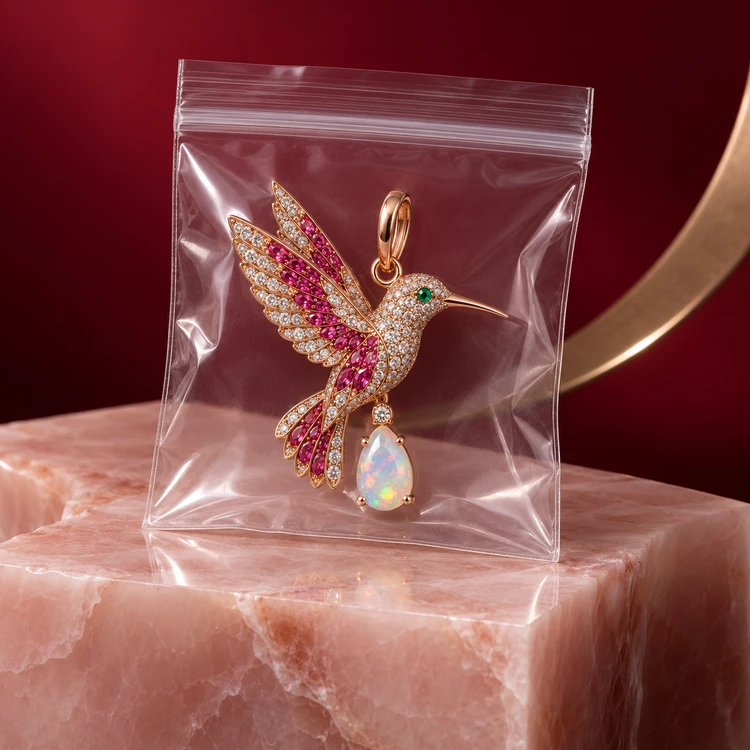
Best Packaging Supplies for Jewelry Businesses
Posted by AppleZipBags Team on Sep 7th 2026
Jewelry businesses need packaging that does much more than make an order look attractive.
The right packaging supplies should help a business:
-
Keep pieces separated
-
Reduce unnecessary handling
-
Organize SKUs
-
Speed up order fulfillment
-
Present products professionally
-
Protect delicate items
-
Fit efficiently into shipping boxes or mailers
-
Control packaging costs
For many jewelry businesses, the most effective system uses several layers rather than expecting one package to do everything.
A typical setup may include:
Jewelry → small resealable bag or pouch → presentation box or insert → cushioning → shipping box or mailer.
For internal inventory, ecommerce fulfillment and product organization, compact resealable bags are particularly useful. Apple Zip Bags offers a dedicated selection of small jewelry packaging bags in 2.5 mil material, including clear and colored options for retail and inventory use.
The best jewelry packaging system is therefore not necessarily the most expensive.
It is the system that balances:
protection + presentation + organization + cost + fulfillment efficiency.
Quick Answer: What Packaging Supplies Does a Jewelry Business Need?
Most jewelry businesses should consider keeping these core packaging supplies available:
| Packaging Supply | Primary Purpose | Best For |
|---|---|---|
| Small resealable bags | Item separation and inventory | Rings, earrings, charms, beads |
| Larger resealable bags | Larger jewelry and sets | Necklaces, bracelets, watches |
| Jewelry cards | Display and organization | Earrings, pendants, necklaces |
| Jewelry pouches | Soft presentation | Rings, bracelets, gifts |
| Jewelry boxes | Structure and presentation | Premium or fragile jewelry |
| Labels | SKU and product identification | Inventory and fulfillment |
| Barcode labels | Faster picking and tracking | Larger inventories |
| Tissue or wrapping paper | Presentation | Customer orders |
| Cushioning | Transit protection | Fragile jewelry |
| Shipping boxes | Structural shipping protection | Most valuable jewelry |
| Padded mailers | Outer packaging for suitable items | Lower-risk compact products |
| Tape | Securing shipping cartons | Ecommerce orders |
| Shipping scale | Accurate parcel weight | Every shipping operation |
A new jewelry business does not necessarily need premium custom packaging for every order.
Start with:
reliable functional packaging first.
Then add:
branding and presentation as the business grows.
1. Small Resealable Jewelry Bags
Small resealable bags are among the most versatile packaging supplies a jewelry business can keep in stock.
They work well for:
-
Rings
-
Stud earrings
-
Hoops
-
Pendants
-
Charms
-
Small chains
-
Beads
-
Findings
-
Loose components
-
Coins and collectibles
Their biggest advantage is simple:
they create one organized package around one piece or SKU.
Why Clear Resealable Bags Work Well
Clear packaging allows staff to identify:
-
Design
-
Stone color
-
Finish
-
Metal color
-
Product type
without repeatedly opening the package.
That can improve:
-
Inventory counts
-
Order picking
-
Photography preparation
-
Quality-control checks
Clear bags are especially useful when products are visually distinctive.
When Colored Jewelry Bags Make Sense
Colored bags can support:
-
Category coding
-
Collection coding
-
Repair status
-
Inventory location
-
Department identification
For example:
-
Pink = earrings
-
Blue = necklaces
-
Green = rings
-
Yellow = bracelets
Color should supplement the SKU system rather than replace it.
2. Choosing the Right Bag Thickness
Film thickness should match the item and the amount of handling expected.
A mil is one-thousandth of an inch. Uline's current bag guide describes 2 mil as a common general-purpose thickness, with progressively heavier film recommended as physical demands increase. Uline's plastic bag thickness guide
2 Mil Bags
A 2 mil bag can work for:
-
Lightweight jewelry
-
Flat components
-
Temporary organization
-
Lightweight craft supplies
2.5 Mil Bags
For many jewelry businesses, 2.5 mil provides a practical middle ground.
It offers more substance than very thin packaging without becoming unnecessarily bulky.
Apple Zip Bags' current small jewelry range uses 2.5 mil film. Its 1,000-pack small jewelry bags are positioned for jewelry sellers, beads, charms and other compact merchandise.
4 Mil Bags
Heavier film may make more sense for:
-
Heavy components
-
Sharper items
-
Repeated handling
-
Larger quantities of metal findings
Do not automatically choose 4 mil because it sounds more premium.
Thickness should solve a real packaging need.
3. Choosing the Correct Jewelry Bag Size
Size is just as important as thickness.
A bag that is too small can:
-
Stretch
-
Fail to close
-
Bend jewelry cards
-
Stress the film
-
Slow down packing
A bag that is too large can:
-
Waste material
-
Allow excessive movement
-
Take up unnecessary storage space
-
Make the product presentation look less intentional
The best rule is:
choose the smallest bag that comfortably holds the complete packaged item while leaving room for the closure.
Apple Zip Bags' packaging bag size guide recommends considering product width, length, height and weight and testing fit before committing to larger quantities.
Measure the Finished Package
If earrings are mounted on a card, measure:
the card + earrings.
If a coin is inside a holder, measure:
the holder.
If a necklace uses a backing card, measure:
the complete assembly.
Do not size packaging around the smallest component if that is not how the product will actually be packed.
Leave Closure Clearance
The jewelry should not sit directly inside the zipper track.
Leave enough space to:
-
Close the bag
-
Reopen it
-
Apply a label
-
Remove the product comfortably
4. Packaging Bags for Rings
Rings usually require very little physical space.
For loose rings, use a compact bag that:
-
Keeps the item contained
-
Leaves room for a label
-
Does not allow excessive movement
If the ring is mounted to a:
-
Card
-
Foam piece
-
Tag
size the package around that insert.
For fine jewelry, a resealable bag may serve primarily as:
inventory packaging
before the ring is transferred into a:
-
Pouch
-
Ring box
-
Gift package
for the customer.
5. Packaging Supplies for Earrings
Earring packaging depends heavily on style.
Stud Earrings
Studs typically work well with:
-
Small jewelry cards
-
Extra-small resealable bags
Hoop Earrings
Hoops need more width.
Measure the complete outer diameter rather than only the wire thickness.
Drop Earrings
Drop earrings need more vertical space.
If mounted on a card, leave enough clearance below the longest point of the jewelry.
A bag that bends long earrings simply to make them fit is too small.
6. Packaging Supplies for Necklaces
Necklaces require packaging that limits tangling without forcing the chain into tight folds.
Useful supplies include:
-
Necklace cards
-
Resealable bags
-
Soft pouches
-
Jewelry boxes
-
Tissue
-
Protective inserts
The best bag size depends on how the necklace is arranged.
A very large bag may allow:
too much movement.
A very small bag may create:
tight folds and tangling.
Use a compact but comfortable packaged configuration.
7. Packaging Supplies for Bracelets
Bracelet packaging varies depending on construction.
A thin chain bracelet may require only:
-
Small card
-
Small bag
A rigid cuff or bangle may require:
-
Larger bag
-
Pouch
-
Box
A beaded bracelet may need more depth because the beads create greater package thickness.
Measure the bracelet in:
the shape in which the customer will receive it.
8. Jewelry Pouches
Soft pouches are useful for:
-
Gift presentation
-
Premium jewelry
-
Rings
-
Bracelets
-
Necklaces
-
Customer-facing packaging
Common materials include:
-
Velvet
-
Satin
-
Cotton
-
Microfiber-style materials
Pouches create a softer, more premium presentation than plain inventory bags.
However, they are generally:
-
More expensive
-
Bulkier
-
Harder to label
-
Less transparent
For many ecommerce businesses, a smart system is:
clear inventory bag internally → pouch for final customer presentation.
9. Jewelry Boxes
Jewelry boxes provide structure.
They are especially useful for:
-
Fine jewelry
-
Fragile designs
-
Gift purchases
-
Rings
-
Premium earrings
-
Necklaces
-
Watches
Boxes can improve both:
-
Protection
-
Perceived presentation value
But they also increase:
-
Packaging cost
-
Storage requirements
-
Shipping dimensions
-
Assembly time
Not every inexpensive charm or bead order requires a rigid jewelry box.
Use boxes where the product or brand positioning justifies them.
10. Jewelry Display Cards
Display cards are extremely useful for:
-
Earrings
-
Necklaces
-
Pendants
-
Bracelets
-
Pins
Cards can provide space for:
-
Brand name
-
Logo
-
Product information
-
Material description
-
Barcode
-
SKU
They also make many products easier to pack consistently.
Once a business standardizes card dimensions, it can often standardize the bag dimensions around those cards.
11. SKU and Inventory Labels
Jewelry packaging should help employees identify exactly what is inside.
A useful internal label may contain:
-
SKU
-
Product name
-
Metal
-
Size
-
Color
-
Stone
-
Quantity
-
Bin location
For example:
SKU: RG-GD-042
Product: Gold Halo Ring
Size: 7
Location: B-12
Clear bags are particularly useful because staff can compare:
the label with the physical item
without opening it.
12. Barcode Labels
As a jewelry business grows, barcodes can make:
-
Picking
-
Receiving
-
Inventory counts
-
Restocking
much faster.
Barcode labels can be attached to:
-
Bags
-
Cards
-
Boxes
-
Tags
Avoid covering the entire viewing area of a clear package with an oversized barcode label.
Ideally, employees should be able to:
scan + read + visually verify.
13. Accurate Product Labels Matter
Jewelry labels should accurately describe what is being sold.
The FTC Jewelry Guides cover representations involving characteristics such as metallic content, gemstone type, weight, size, treatments and other qualities. FTC Jewelry Guides
If a package says:
-
Sterling silver
-
Gold plated
-
Lab-grown diamond
-
Natural gemstone
-
Cultured pearl
the packaging information should correspond to the actual product and listing.
Do not let packaging convenience create inaccurate product descriptions.
14. Clear vs. Colored Jewelry Packaging
Clear packaging is generally strongest when visibility is important.
Choose clear when staff frequently needs to see:
-
Stone
-
Finish
-
Shape
-
Design
-
Product variation
Colored packaging can be useful when color communicates:
-
Category
-
Department
-
Collection
-
Repair status
-
Workflow status
A strong compromise is:
clear bag + colored SKU label.
That preserves visibility without requiring the business to stock multiple colors of every size.
15. Plain vs. Branded Jewelry Packaging
New jewelry businesses often assume everything needs a logo immediately.
It does not.
Plain packaging can be useful because it is:
-
Flexible
-
Lower commitment
-
Easy to use across many products
-
Easier to purchase in standard quantities
Branding can be added with:
-
Stickers
-
Jewelry cards
-
Inserts
-
Tissue
-
Thank-you cards
As order volume grows, custom printing may become more attractive.
Apple Zip Bags' guide to custom printed versus plain jewelry bags discusses this tradeoff in terms of branding, budget, order volume and customer experience.
When Plain Packaging Makes Sense
Plain packaging is particularly practical for:
-
Startups
-
Inventory storage
-
Wholesale operations
-
Testing new products
-
Businesses with many changing SKUs
When Branded Packaging Makes Sense
Custom or branded packaging becomes more attractive when:
-
Order volume is stable
-
Brand presentation is important
-
Packaging specifications are established
-
Repeat customers matter
-
Unboxing is part of marketing
16. Packaging Supplies for Beads and Findings
Jewelry businesses that sell supplies have different packaging requirements from finished-jewelry brands.
Useful packaging for beads and findings includes:
-
Extra-small resealable bags
-
SKU labels
-
Quantity labels
-
Storage bins
-
Drawer organizers
Products may include:
-
Jump rings
-
Clasps
-
Crimps
-
Ear wires
-
Beads
-
Charms
-
Connectors
-
Head pins
For tiny parts, use the smallest practical bag that still allows:
-
Easy opening
-
Labeling
-
Accurate counts
17. Packaging Larger Jewelry Products
Not every jewelry product fits into a tiny bag.
Larger packaging may be required for:
-
Watches
-
Large bangles
-
Statement necklaces
-
Jewelry sets
-
Large display cards
-
Multiple-item orders
Apple Zip Bags also offers larger 2.5 mil resealable bags that can accommodate bigger product configurations.
Avoid forcing oversized jewelry into a small bag simply to reduce the number of packaging SKUs.
18. 100-Pack vs. 1,000-Pack Jewelry Bags
Quantity should follow usage.
Choose 100 Packs When
A 100-pack is useful when:
-
Testing a new size
-
Testing a new color
-
Launching a new product
-
Packaging volume is low
-
The application is seasonal
Apple Zip Bags currently offers 100-pack small 2.5 mil jewelry bags for lower-volume or test purchasing.
Choose 1,000 Packs When
A 1,000-pack becomes more practical when:
-
The size is proven
-
Usage is predictable
-
Hundreds of products are packaged monthly
-
The same bag works across multiple SKUs
-
Frequent reordering becomes inconvenient
A simple purchasing rule is:
test with 100; standardize with 1,000.
19. Calculate Packaging Cost Per Order
Jewelry businesses should know what packaging actually costs.
Include:
-
Product bag
-
Pouch
-
Box
-
Label
-
Tissue
-
Insert
-
Cushioning
-
Mailer
-
Tape
For example:
Bag = $0.02
Label = $0.05
Jewelry card = $0.10
Pouch = $0.40
Shipping box = $0.60
Insert = $0.10
Total packaging:
$1.27 per order
before postage and labor.
A business shipping 10,000 orders annually would spend:
$12,700
at that packaging cost.
Packaging decisions therefore deserve the same attention as other operating expenses.
20. Shipping Boxes for Jewelry Businesses
Small bags, pouches and jewelry boxes are usually:
inner packaging.
They should not automatically be treated as the complete transit package.
FedEx's current jewelry-shipping guidance recommends cushioning jewelry, placing it in a snug inner box and using a sturdy corrugated outer box with empty space filled to prevent movement. FedEx jewelry shipping guide
For valuable or fragile jewelry, this distinction is important.
A beautiful velvet pouch provides presentation.
It does not necessarily provide:
impact protection.
21. Cushioning Materials
Useful cushioning supplies may include:
-
Bubble cushioning
-
Foam
-
Paper padding
-
Inserts
-
Corrugated dividers
The purpose is to prevent:
-
Shifting
-
Impact
-
Crushing
-
Movement between pieces
UPS recommends selecting suitable cushioning materials and limiting movement inside the shipping box; its current guidance also recommends a two-box method for some sharp, fragile, luxury or accessory shipments. UPS packaging tips
22. Padded Mailers
Padded mailers can be useful for suitable lower-risk products, particularly when the product already has structural inner packaging.
They may work for:
-
Certain fashion jewelry
-
Small accessories
-
Packaged findings
-
Bead orders
However, use caution with:
-
Fragile stones
-
Rigid jewelry that can bend
-
High-value jewelry
-
Pieces needing crush resistance
Do not choose a padded mailer merely because it reduces shipping cost.
The outer package must match the product's actual protection requirements.
23. Small Shipping Boxes
Small boxes are frequently useful for jewelry because they provide:
-
Crush resistance
-
Room for cushioning
-
Better structure
-
More secure presentation
USPS advises using packaging strong enough to protect the contents and leaving enough room for cushioning so items do not shift during transit. USPS package preparation guide
For ecommerce jewelry, a compact box can often provide a better balance than an oversized shipping carton.
24. Packing Tape
A jewelry business shipping daily should keep proper packaging tape available.
Tape should:
-
Secure carton seams
-
Remain adhered through transit
-
Be easy for staff to apply consistently
Avoid depending on:
-
Decorative string
-
Gift ribbon
-
Lightweight craft tape
to perform the structural job of shipping tape.
Decorative presentation belongs inside the shipping package.
25. Shipping Labels
Reliable shipping labels are another essential packaging supply.
A growing jewelry business should consider:
-
Thermal label printer
-
Standardized label dimensions
-
Consistent return-address format
-
Tracking workflow
For security, avoid unnecessarily advertising high-value contents on the outside of a shipment.
The shipping box should generally look:
professional but discreet.
26. Packing Slips and Order Inserts
Useful inserts may include:
-
Packing slip
-
Thank-you card
-
Jewelry care instructions
-
Return information
-
Warranty information
-
Promotional card
Not every order needs all of these.
Too many inserts can create:
-
Waste
-
Packing time
-
Clutter
Choose materials that add real operational or customer value.
27. Jewelry Care Cards
Care cards are particularly useful when customers need product-specific instructions.
Depending on the jewelry, a card may cover:
-
Cleaning
-
Storage
-
Water exposure
-
Chemical exposure
-
Handling
Avoid generic claims that apply poorly to some materials.
A gold-plated fashion piece, sterling-silver item and gemstone ring may require different care guidance.
28. Thank-You Cards
Thank-you cards can make ecommerce orders feel more personal.
Keep them:
-
Simple
-
On-brand
-
Useful
Possible content includes:
-
Thank-you message
-
Social handle
-
Website
-
Customer-service contact
-
Review invitation
Avoid making the insert so large that it forces the business into unnecessarily larger shipping packaging.
29. Tissue Paper and Decorative Packaging
Decorative materials can improve presentation, but they should be used intentionally.
Potential supplies include:
-
Tissue
-
Branded paper
-
Ribbon
-
Stickers
-
Paper sleeves
Use them when they support:
-
Brand positioning
-
Gifting
-
Premium presentation
Do not add packaging layers simply because competing brands do.
30. Packaging for Wholesale Jewelry Orders
Wholesale packaging emphasizes:
-
Speed
-
SKU separation
-
Quantity accuracy
-
Efficient packing
A wholesale order may contain:
-
25 rings
-
50 earrings
-
30 necklaces
Individually packaging every piece can make sense when retailers need products ready for:
-
Display
-
Resale
-
Inventory
Alternatively, identical low-risk components can sometimes be grouped by SKU.
The packaging specification should be agreed upon with the wholesale customer where possible.
31. Packaging for Jewelry Trade Shows
Trade-show sellers need supplies that help with:
-
Transport
-
Setup
-
Inventory
-
Repacking
-
Customer purchases
Useful supplies include:
-
Clear resealable bags
-
Jewelry boxes
-
Small shopping bags
-
Pouches
-
Labels
-
Storage bins
-
Portable packaging station
Pre-packaging inventory before the event can make replenishing displays much faster.
32. Packaging for Jewelry Repairs
Repair businesses benefit from packaging designed around identification.
A repair bag label might contain:
-
Repair number
-
Customer reference
-
Item description
-
Date received
-
Required work
-
Status
Colored labels or bags can indicate:
-
Received
-
Awaiting estimate
-
Waiting for parts
-
In progress
-
Completed
Never let color replace the unique repair number.
33. Packaging for High-Value Jewelry
High-value merchandise often requires more protection and stronger security procedures than ordinary fashion jewelry.
Consider:
-
Appropriate jewelry holder
-
Pouch or inner box
-
Cushioning
-
Rigid outer packaging
-
Discreet labeling
-
Tracking
-
Signature requirements where appropriate
-
Appropriate insurance or declared-value arrangements
A small resealable bag may still be useful for:
inventory organization
but should not be expected to provide the entire protection system.
34. Standardize Your Packaging Sizes
One of the best ways to reduce packaging complexity is to standardize.
Instead of stocking 20 nearly identical bag sizes, many businesses can create:
Extra Small
For:
-
Earring backs
-
Crimps
-
Tiny charms
-
Small beads
Small
For:
-
Rings
-
Stud earrings
-
Small pendants
-
Coins
Medium
For:
-
Earrings
-
Bracelets
-
Necklaces
-
Larger charms
Large
For:
-
Watches
-
Jewelry sets
-
Oversized cards
The exact dimensions should be based on the actual product catalog.
35. Standardize Packaging SKUs Too
Assign packaging its own internal SKU.
Examples:
-
BAG-XS-CLR
-
BAG-S-CLR
-
BAG-M-CLR
-
BOX-RING-WHT
-
BOX-NKL-BLK
-
POUCH-S-GRY
Then map each product to:
its required packaging SKU.
This reduces employee guesswork.
36. Build a Packaging Station
A well-organized packing station can include:
-
Bags
-
Cards
-
Boxes
-
Pouches
-
Labels
-
Tape
-
Tissue
-
Cushioning
-
Inserts
-
Scale
-
Printer
Keep the most frequently used supplies within easy reach.
A worker should not need to walk across a warehouse to find:
the most common small bag.
37. Track Packaging Inventory
Packaging is inventory too.
Monitor:
-
Current quantity
-
Monthly usage
-
Supplier lead time
-
Reorder point
-
Safety stock
Running out of a $0.02 bag can stop fulfillment of a $200 order.
Core packaging should therefore have:
defined reorder points.
38. Do Not Overstock Specialty Packaging
Bulk purchasing can reduce cost, but purchasing thousands of:
-
Seasonal colors
-
Rare box sizes
-
Experimental pouches
can create dead inventory.
Buy larger quantities of:
high-velocity core packaging.
Keep smaller quantities of:
specialty packaging.
39. Test Packaging Before Buying in Bulk
Before purchasing thousands of any new supply:
-
Package the actual item.
-
Apply the label.
-
Close the package.
-
Place it in the presentation packaging.
-
Add cushioning.
-
Pack the shipping carton.
-
Weigh the complete shipment.
-
Measure it.
-
Test unpacking.
-
Evaluate presentation.
Theoretical dimensions are useful.
A real packing test is better.
40. Common Jewelry Packaging Mistakes
Using One Bag Size for Everything
Different products have different physical requirements.
Buying Bags Too Tight
Leave working clearance.
Using Huge Bags for Tiny Jewelry
Avoid wasted space and poor presentation.
Ignoring Product Thickness
Rings, watches and beads create depth.
Ignoring Sharp Components
Earring posts and findings may need backing material or heavier film.
Using Decorative Packaging as Shipping Protection
Presentation materials do not necessarily provide structural protection.
Overpackaging
More layers do not always create more value.
Buying Thousands Before Testing
Validate sizing first.
Ignoring Packaging Cost
Track cost per order.
Ignoring Fulfillment Time
Packaging that takes too long to assemble increases labor cost.
Using Color Without a System
Color coding should communicate something meaningful.
Skipping SKU Labels
Growing inventories require consistent identification.
Making Unsupported Protection Claims
Do not call packaging:
-
Archival
-
Anti-tarnish
-
Waterproof
-
Hermetic
unless its specifications support the claim.
41. Jewelry Business Packaging Checklist
Before finalizing your packaging system, ask:
-
What jewelry categories do I sell?
-
Which products need individual bags?
-
Which products need cards?
-
Which products need pouches?
-
Which products need boxes?
-
What are my core bag sizes?
-
Is 2–2.5 mil suitable for everyday packaging?
-
Do any sharp products need heavier film?
-
Are the bags easy to open and close?
-
Are products visible?
-
Do labels fit?
-
Does each product have a SKU?
-
Do I need barcodes?
-
Should I use clear or colored bags?
-
Would colored labels be simpler?
-
Is branding necessary on the bag itself?
-
Could plain bags plus branded stickers work?
-
How many bags do I use monthly?
-
Should I buy 100 or 1,000?
-
Have I tested sizes before buying bulk?
-
Do I need jewelry cards?
-
Do I need pouches?
-
Do I need rigid boxes?
-
What cushioning is required?
-
Is the outer shipping package strong enough?
-
Does jewelry move inside the parcel?
-
Am I overpackaging?
-
Is my packaging cost included in product margins?
-
Do I track packaging inventory?
-
Do I have reorder points?
-
Have I standardized packaging SKUs?
-
Is the packing station organized?
-
Are customer-facing product claims accurate?
-
Is high-value jewelry handled differently?
-
Does the final package look intentional?
42. Frequently Asked Questions
What packaging supplies does a jewelry business need?
Most jewelry businesses should have:
-
Small resealable bags
-
Cards
-
Pouches or boxes where appropriate
-
Labels
-
Shipping boxes or mailers
-
Cushioning
-
Tape
-
Shipping labels
The exact mix depends on product value, fragility and brand positioning.
What are the best bags for jewelry businesses?
For many everyday inventory and fulfillment applications, small clear resealable bags around:
2–2.5 mil
are practical.
Apple Zip Bags' 2.5 mil format is particularly relevant for rings, earrings, charms, beads and other small products.
Is 2.5 mil good for jewelry packaging?
Yes, for many general jewelry-business applications.
It provides a useful balance between:
-
Flexibility
-
Compact storage
-
Everyday durability
Heavier or sharper items may need additional protection.
Are clear or colored bags better?
Clear bags are usually the best general-purpose choice because staff and customers can see the product.
Colored bags are useful for:
-
Branding
-
Category coding
-
Workflow organization
Should jewelry businesses use boxes?
Use boxes when:
-
Product is fragile
-
Product is valuable
-
Premium presentation matters
-
Structural protection is needed
Not every low-cost component requires a box.
Should jewelry businesses use pouches?
Pouches work well for:
-
Gifts
-
Premium presentation
-
Soft storage
-
Rings
-
Necklaces
-
Bracelets
They can be combined with a clear inventory bag.
What size bags should I use for jewelry?
Measure the:
complete packaged product
including cards, holders or inserts.
Choose the smallest bag that fits comfortably and still closes easily.
Should jewelry bags be bigger than the product?
Slightly.
Avoid an exact, tight fit.
But excessive empty space is unnecessary.
Should every jewelry piece have its own bag?
For individually inventoried ecommerce products, one piece or SKU per bag can simplify:
-
Picking
-
Counting
-
Labeling
-
Fulfillment
Bulk findings may be grouped when sold as one SKU.
Should I use clear bags with labels?
Yes.
This is one of the most flexible systems because the label provides exact identification while the clear bag allows visual verification.
Should I buy 100 or 1,000 jewelry bags?
Choose:
100 when testing.
Choose:
1,000 when the size is proven and usage is predictable.
Are jewelry bags enough for shipping?
Usually not by themselves.
Use appropriate:
-
Cushioning
-
Inner box
-
Outer shipping box or mailer
based on product value and fragility.
How can I make plain jewelry packaging look branded?
Add:
-
Logo stickers
-
Branded cards
-
Tissue
-
Thank-you inserts
-
Printed labels
This lets a business create brand identity without immediately committing to custom-printed bags.
How many jewelry bag sizes should a business stock?
Many businesses can cover a large portion of their catalog with:
3–5 core sizes.
The right number depends on the range of jewelry being sold.
Should packaging supplies have SKUs?
For a growing business, yes.
Packaging SKUs make it easier to:
-
Reorder
-
Train employees
-
Track supplies
-
Map products to packaging
What is the most important jewelry packaging supply?
There is no single supply that does everything.
A strong system combines:
item containment + presentation + identification + shipping protection.
Final Verdict: Best Packaging Supplies for Jewelry Businesses
The best packaging supplies for jewelry businesses are the ones that work together as a system.
Start with:
small resealable jewelry bags
for:
-
Inventory
-
Separation
-
SKU organization
-
Fulfillment
For many everyday applications:
2–2.5 mil
is a practical thickness range, with 2.5 mil providing a versatile option for many jewelry, bead and charm businesses.
Add:
jewelry cards
for organized display.
Use:
pouches and jewelry boxes
when presentation or structural protection justifies them.
Support inventory with:
SKU and barcode labels.
Then prepare customer shipments using:
appropriate cushioning + sturdy outer packaging + secure shipping labels.
For purchasing quantities:
start small when testing.
Once the packaging specification is proven:
buy core supplies in larger quantities.
And above all, avoid trying to make one package perform every job.
A resealable bag is excellent for:
containment and organization.
A pouch is excellent for:
presentation.
A jewelry box provides:
structure.
Cushioning provides:
movement and impact protection.
And the shipping carton provides:
the outer transit layer.
When these supplies are selected intentionally, a jewelry business can build a packaging system that is:
-
Faster to use
-
Easier to scale
-
Better organized
-
More professional
-
More cost-efficient
-
Better suited to ecommerce fulfillment
The strongest jewelry packaging strategy is therefore:
right-size every layer, standardize the supplies you use repeatedly, test before buying in bulk, and spend extra only where it adds meaningful protection or customer value.